Marlene Helps Load Barret's Bullets: Walking Through Midgar Again with the FF7 Remake Art Book
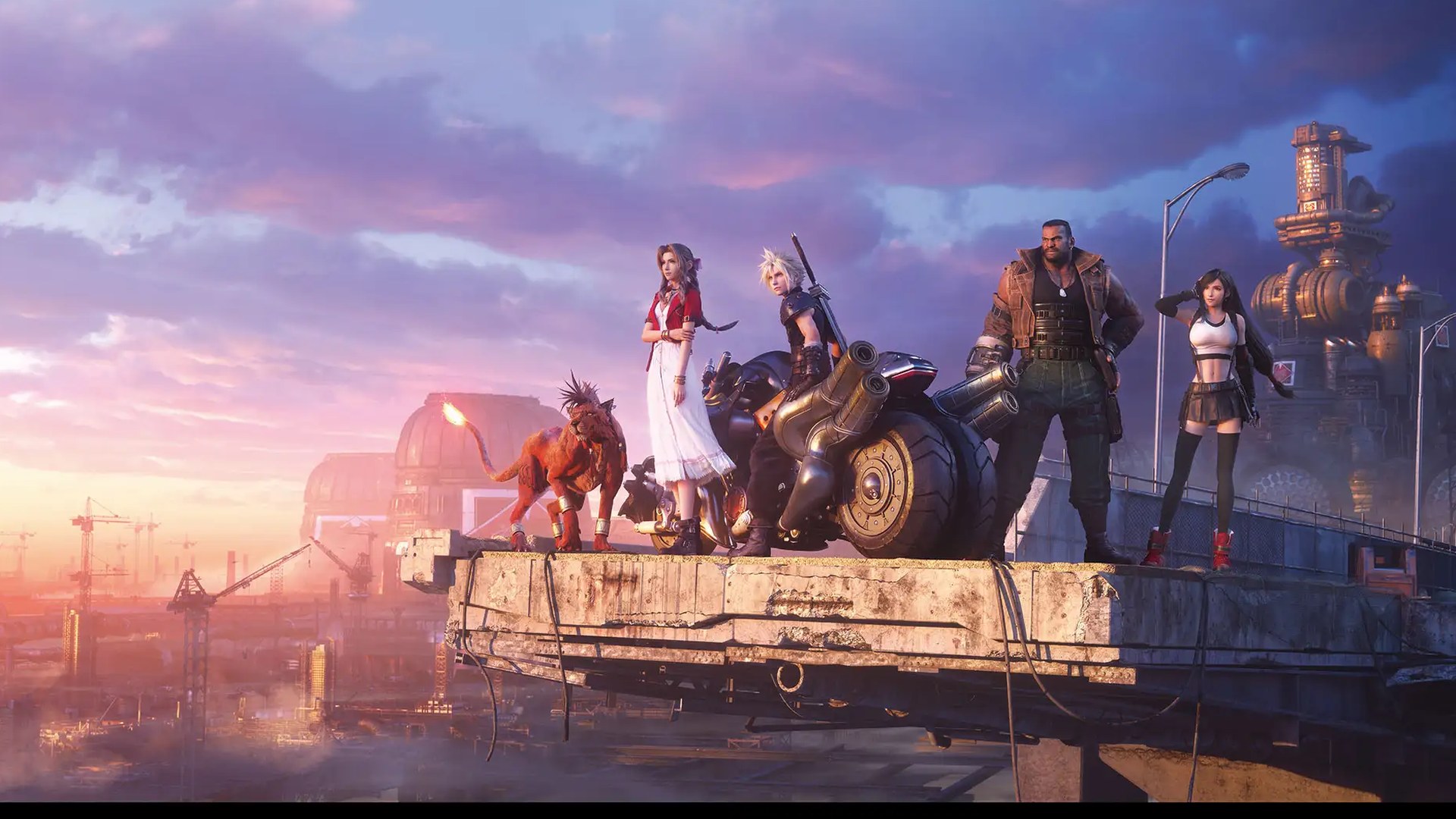
From Mako Reactor 1 to the Shinra Building, we follow the chapters of Final Fantasy VII Remake through Midgar. At every stop, we open the official art book to the matching page and look at what those places looked like on the design sheets.
 ArtSee Editors
Contents · 0
Note: this article was translated from Chinese with the help of AI. Please excuse any awkward phrasing.
The story of Final Fantasy VII Remake takes place entirely in Midgar.
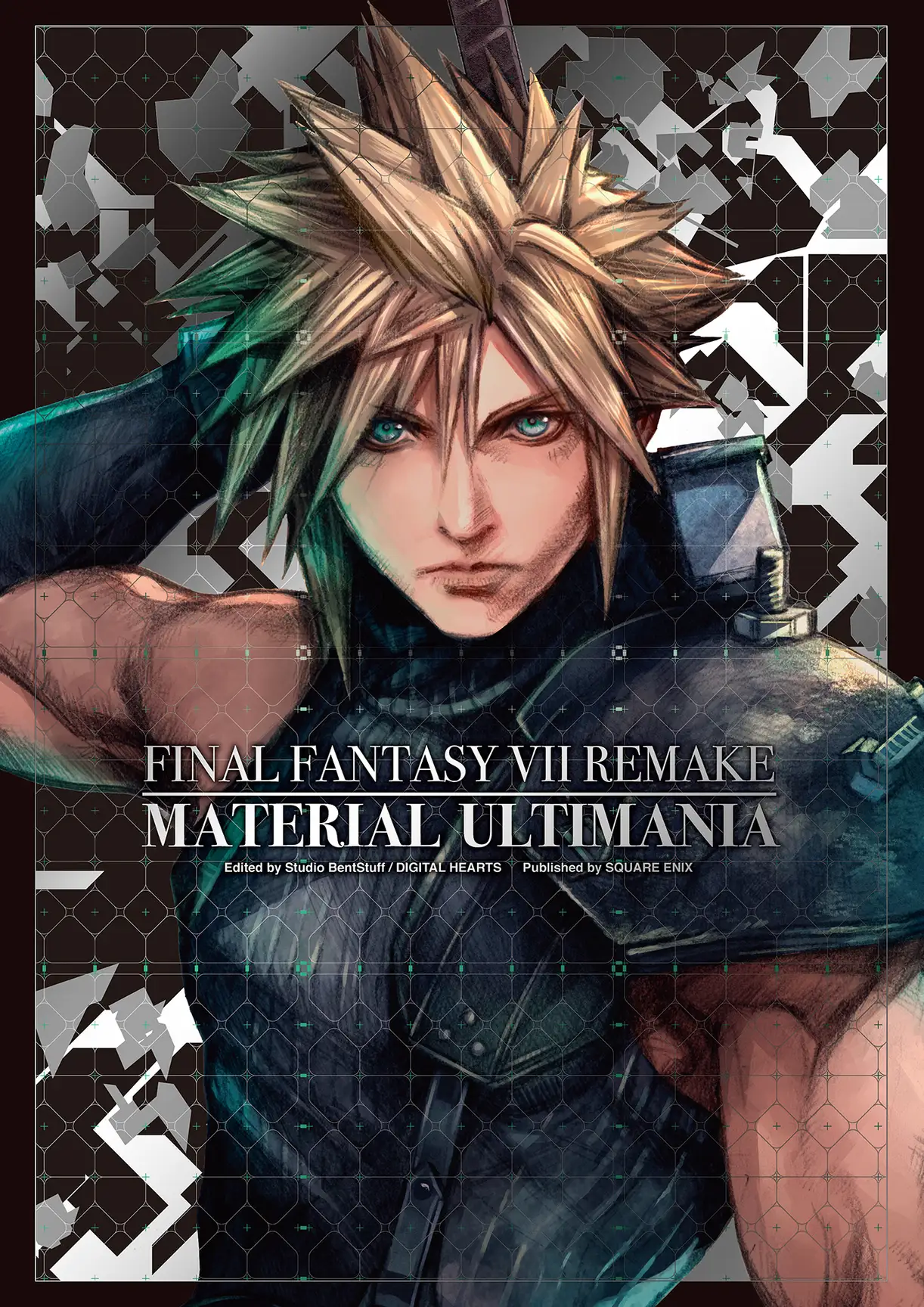
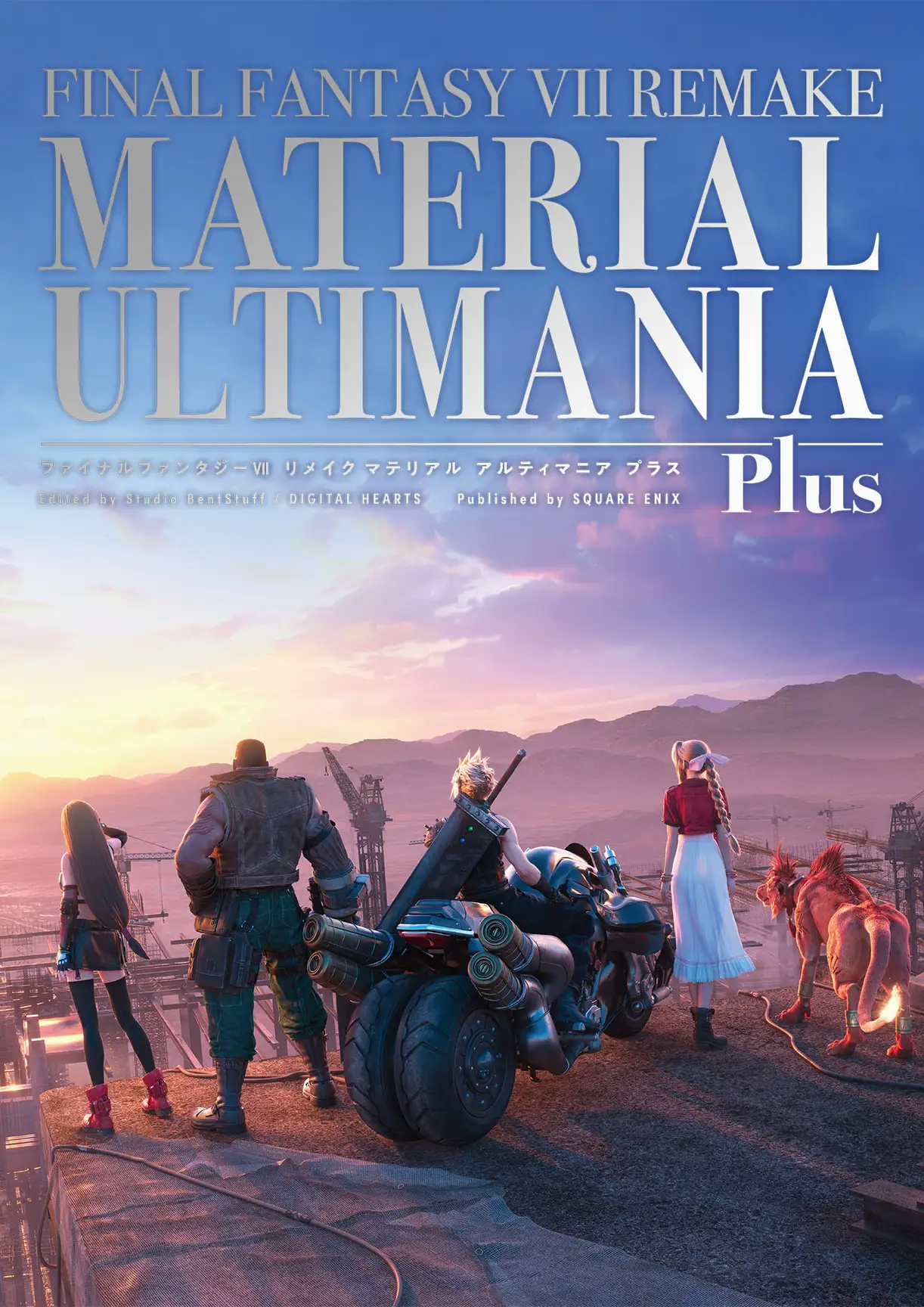
I went through the official art book, Material Ultimania, from cover to cover, and noticed something: many places that flash by in the game have a full backstory on the design sheets.
So let's try a different approach. We'll walk through Midgar again, chapter by chapter, and at every stop, open the book to the matching page.
Chapter 1, Mako Reactor 1: Barret's Bullets
Right from the opening, Barret charges ahead with his gun-arm. Down the corridors of Mako Reactor 1 he sprays everything in front of him: bullets everywhere, lots of noise, not much accuracy.
Turn to page 77 of the art book, and in the upper right corner is a schematic of that gun-arm, drawn from the top, side, front and back. The notes beside it are remarkably detailed: the materia slot is 2.2 cm wide, you press the blue part to insert a materia and press again to eject it, and the magazine is about 4 to 4.5 cm thick.
The note on ammunition says it uses cheap handgun rounds you can buy anywhere: low power, poor accuracy, a very wide spread.
The last note reads: the bullets are small, so Marlene might help load them.
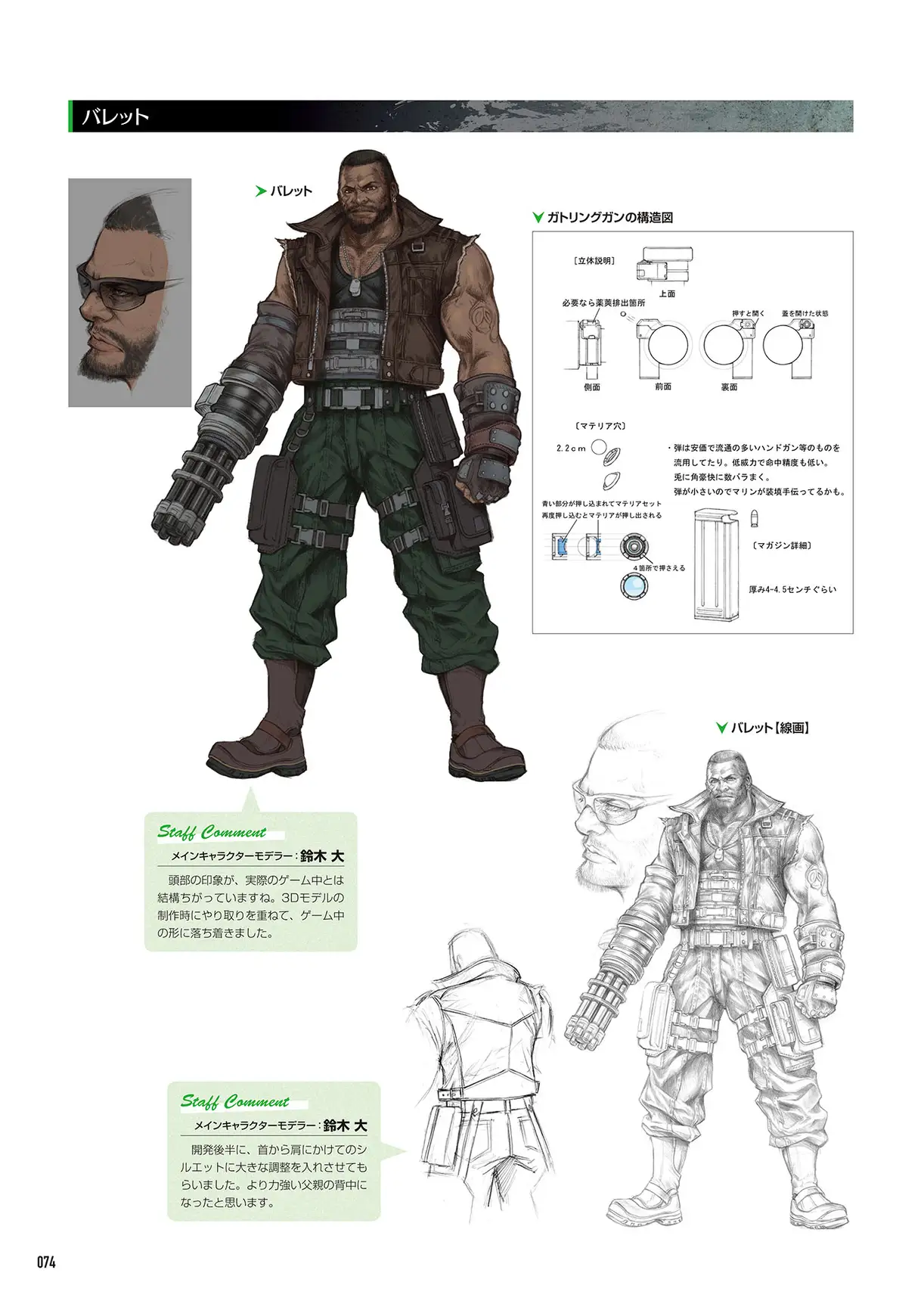
I love this note. It pulls the gun out of "cool hero weapon" territory and back into the slums: the leader of a resistance group who can't afford good ammunition, using the cheapest rounds around, with a magazine his daughter may have filled one bullet at a time.
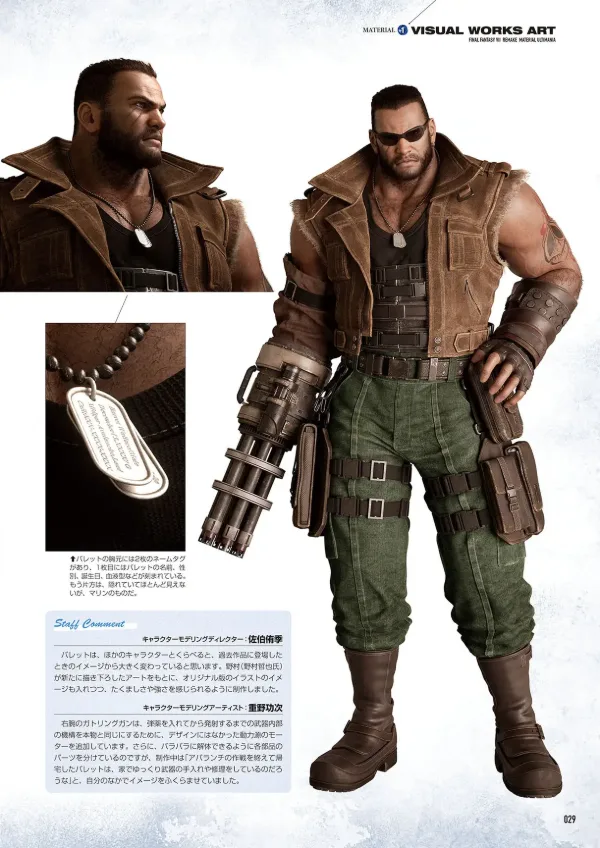
Next to the line art on the same page, character modeler Dai Suzuki says that late in development they reworked the silhouette from Barret's neck to his shoulders so it would look more like the strong back of a father. Flip back to page 32, and Barret wears two tags on his chest. One is his own. The other is hidden and barely visible — it's Marlene's.
FINAL FANTASY VII Remake: Material Ultimania
Chapter 3, Seventh Heaven: Tifa's Long Claws
In Chapter 3 we return to Seventh Heaven. Tifa stands behind the bar and asks Cloud what he'd like to drink.
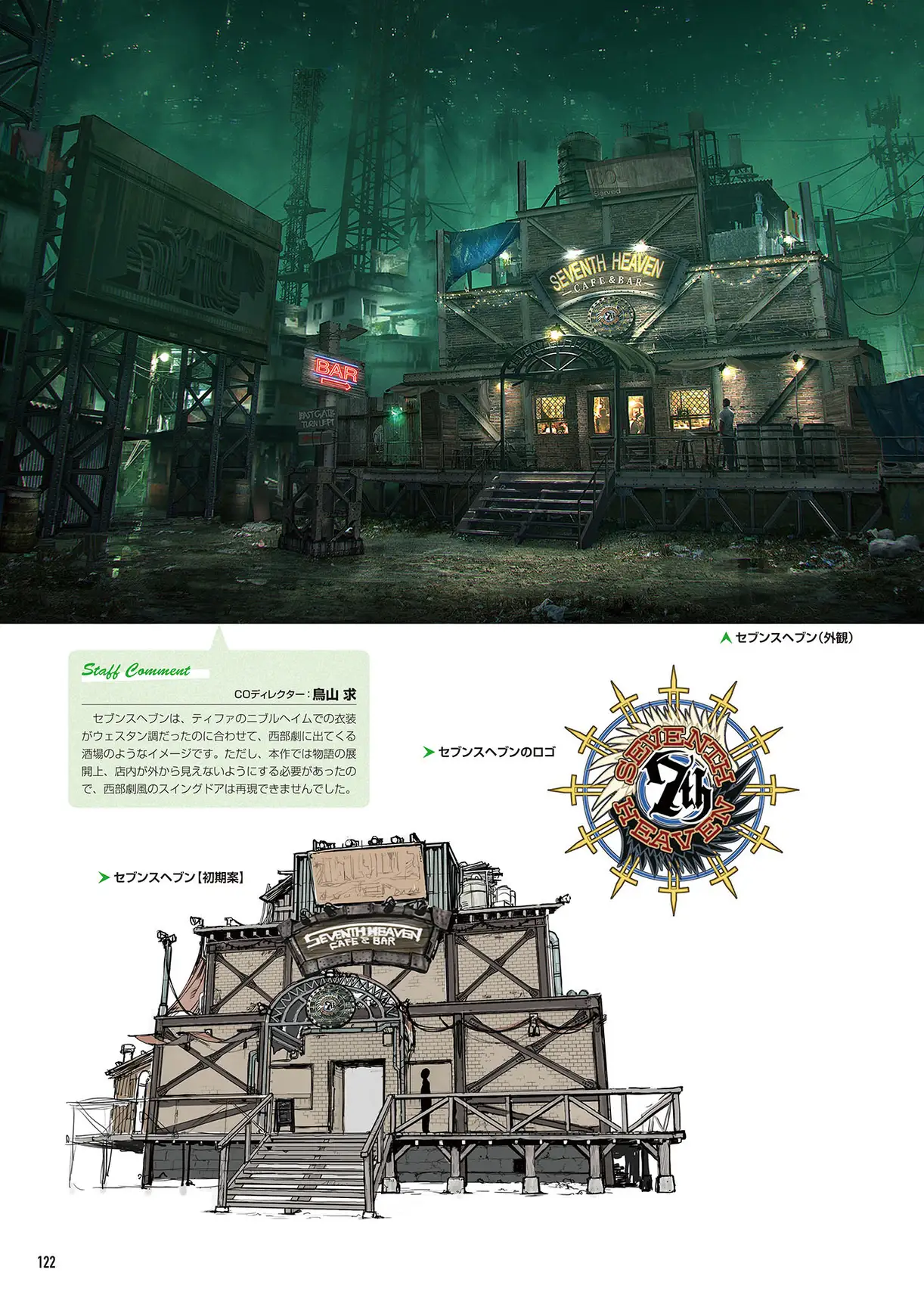
The bar is on page 125. The early concept at the bottom shows a sign reading "CAFE & BAR" and a wooden façade — a saloon straight out of a Western. Co-director Motomu Toriyama explains that it was meant to echo Tifa's Western-style outfit from Nibelheim. But the new story needed the inside of the bar to be hidden from the street, so the saloon's signature swinging doors never made it in.
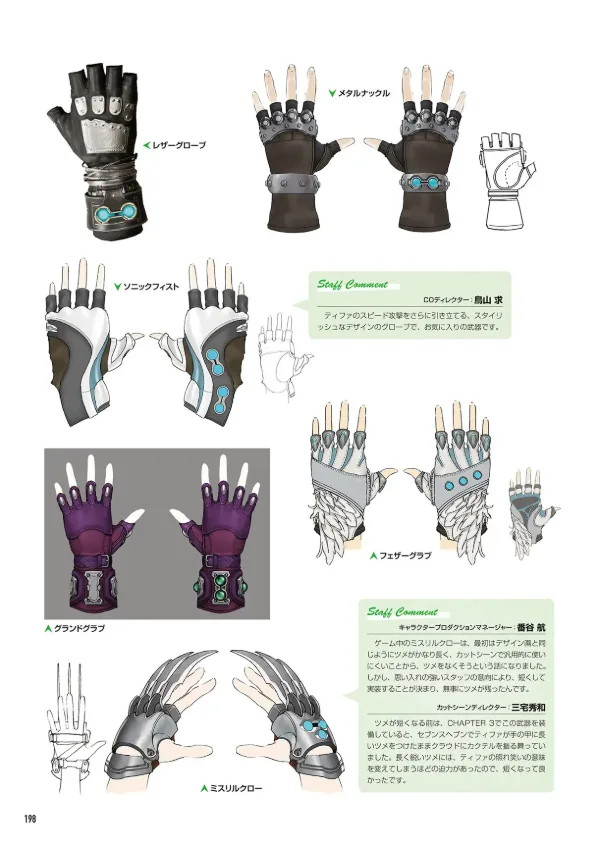
Turn to page 201 for Tifa's gloves. In the bottom right are the Mythril Claws, and on the design sheet the claws are long. According to the character production manager, long claws looked cool but were impractical. Someone suggested removing them entirely, but another staff member loved them so much that they compromised and shortened them.
The cutscene director then adds one of my favorite comments in the whole book: before the claws were shortened, if you equipped this weapon in Chapter 3, Tifa would mix Cloud's drink at Seventh Heaven while wearing those long claws. They looked so aggressive that even her shy smile felt different, so shortening them was a good call.
FINAL FANTASY VII Remake: Material Ultimania
"Tifa's Theme," which plays in Seventh Heaven, was handled with the same care. On page 300, arranger Shotaro Shima explains that the original melody comes in four-bar phrases, with a gap in the third and fourth bars of each phrase. The new countermelody sits only in those gaps and never gets in the way of the original melody. The original was built around woodwinds; the remake switches to piano, aiming for a warm sound that could comfort Cloud as he sits in Seventh Heaven.
The prop team worried the claws were too fierce, and the arranger carefully avoided touching the original melody. What nobody wanted to lose in this character was her gentleness.
Chapter 4, Jessie's Home: An ID Card
In Chapter 4, Cloud rides up onto the plate with Jessie and sneaks into her family home to get her father's Shinra ID card.
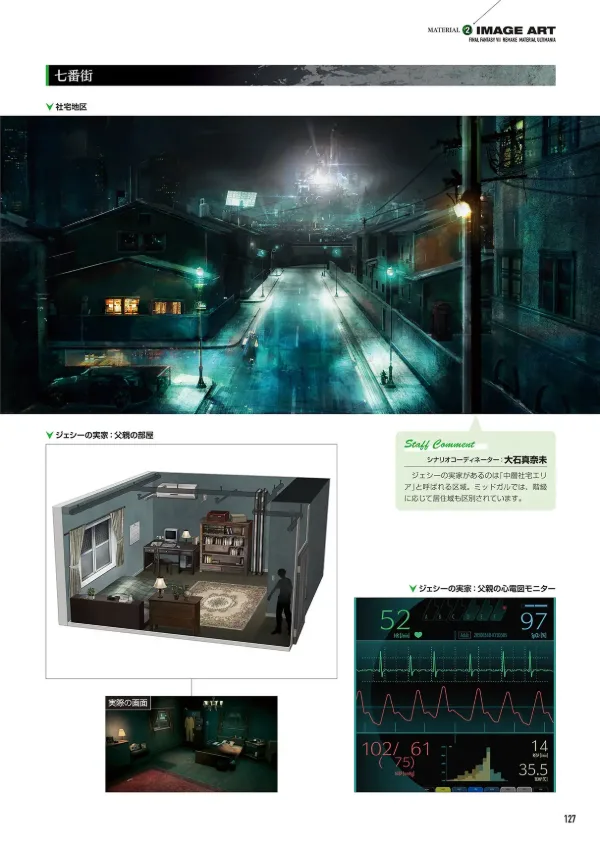
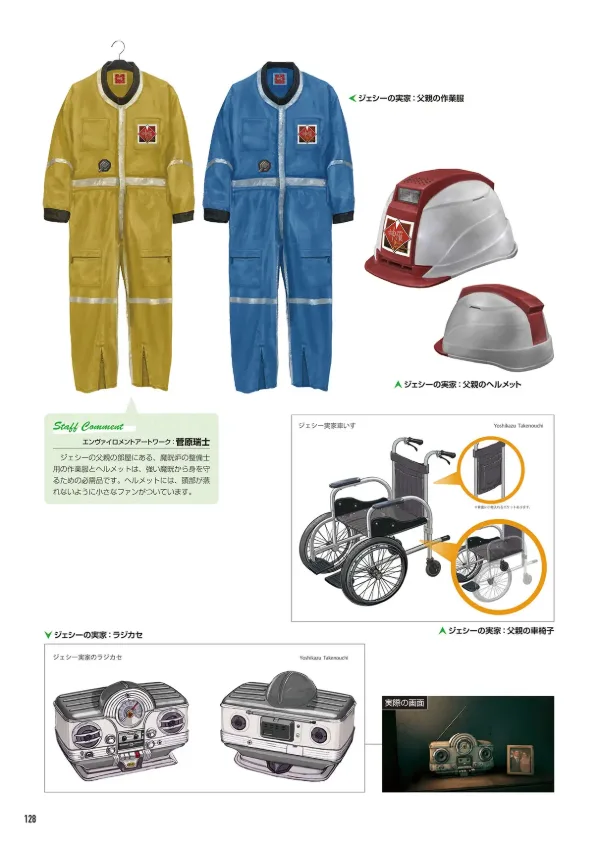
Page 130 notes that Jessie's home is in the "mid-level company housing" area — in Midgar, even where you live is divided by class. The same page shows the heart monitor in her father's room, with every reading on the screen designed. The next page shows his work clothes and helmet: protective gear for a mako reactor maintenance worker, with a little fan built into the helmet so it doesn't get stuffy.
FINAL FANTASY VII Remake: Material Ultimania
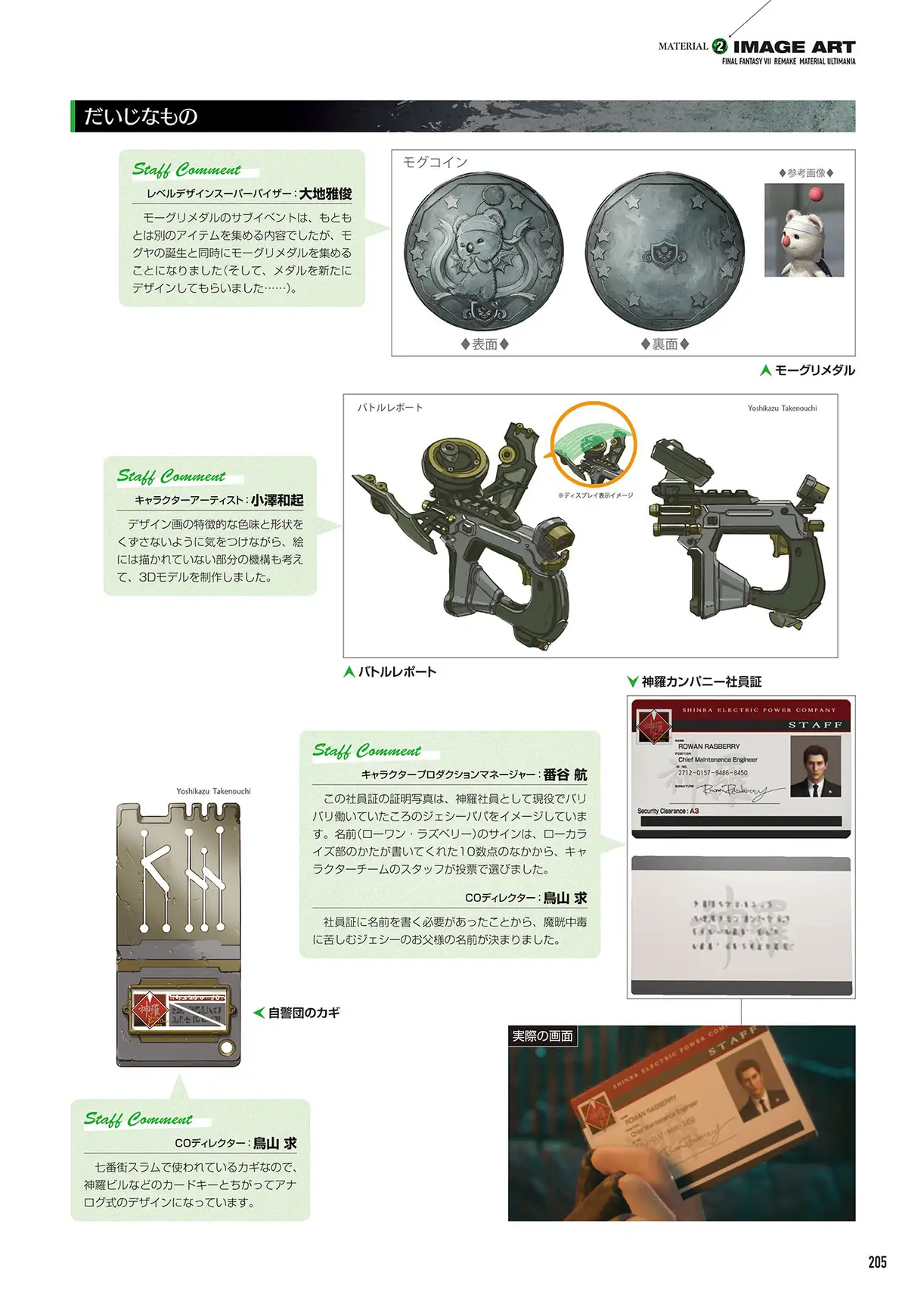
Page 208 is the ID card itself: ROWAN RASBERRY, Chief Maintenance Engineer. Motomu Toriyama explains that because an ID card needs a name, Jessie's father, who suffers from mako poisoning, finally got one. The signature on the card was chosen by a vote in the character team, from more than ten versions written by the localization team.
Jessie's own surname came about the same way. Page 88 is a whole set of photos of Jessie, from baby to stage actress, with a letter to her family and a theater ticket underneath. Once the team decided to print the actor's name on the ticket, Jessie got her full name.
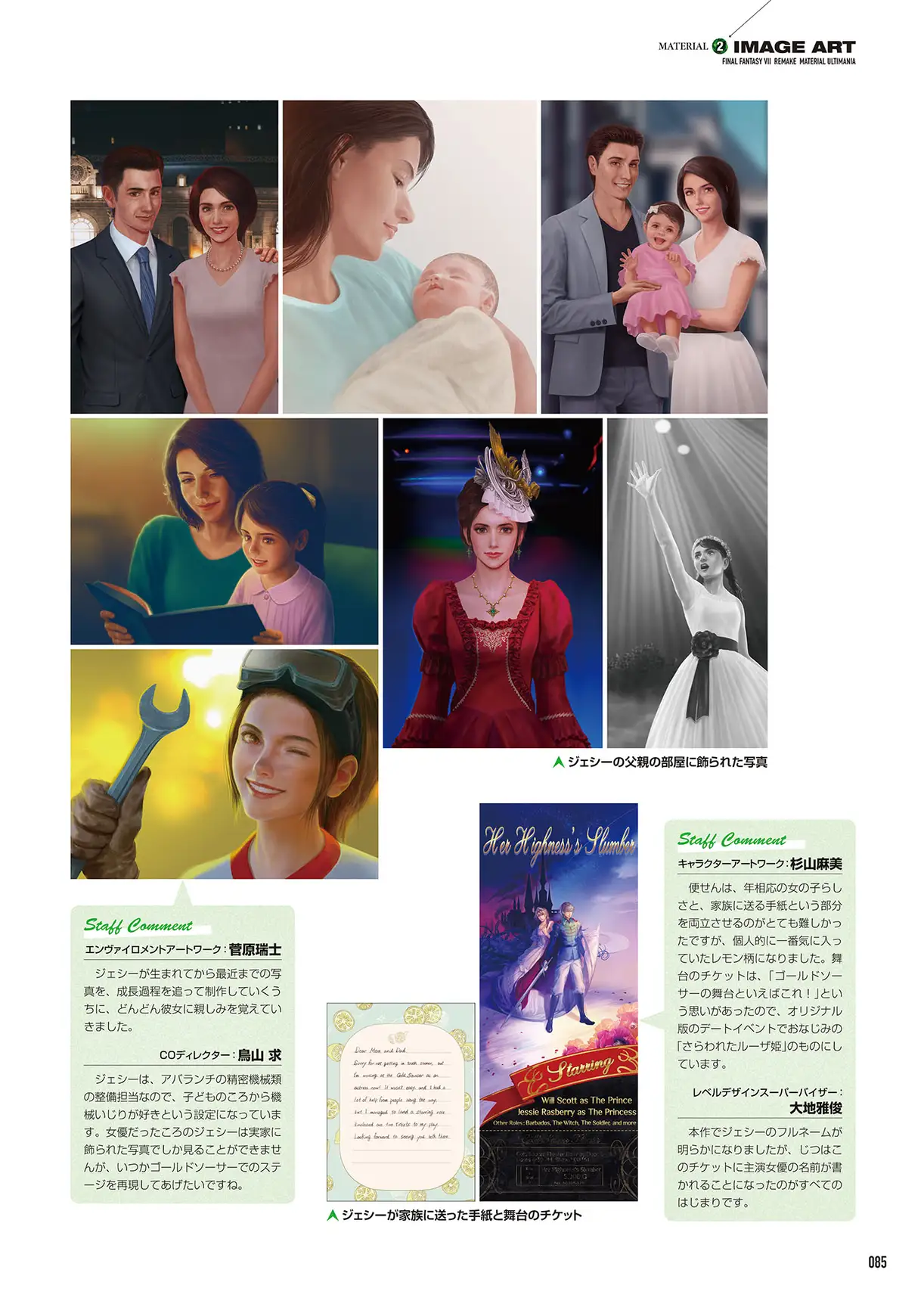
Page 90 shows Jessie's mother. Scenario coordinator Manami Oishi notes that if you walk up to the living room door during the infiltration, you can hear her chatting happily with Jessie and the others. The character artist who designed her says everyone knew from the start that she was someone who'd had a hard life, and she was drawn holding back tears.
Jessie's family barely appears on screen in this chapter. Yet a bedroom, a heart monitor, an ID card and a helmet with a fan already tell you everything about this family: a father who worked at a mako reactor until it made him sick, and a daughter who joined a group that blows up mako reactors.
Chapter 8, the Church and Aerith's House: The Only Green
In Chapter 8, Cloud falls from the sky into the church in Sector 5 and lands in a bed of flowers.
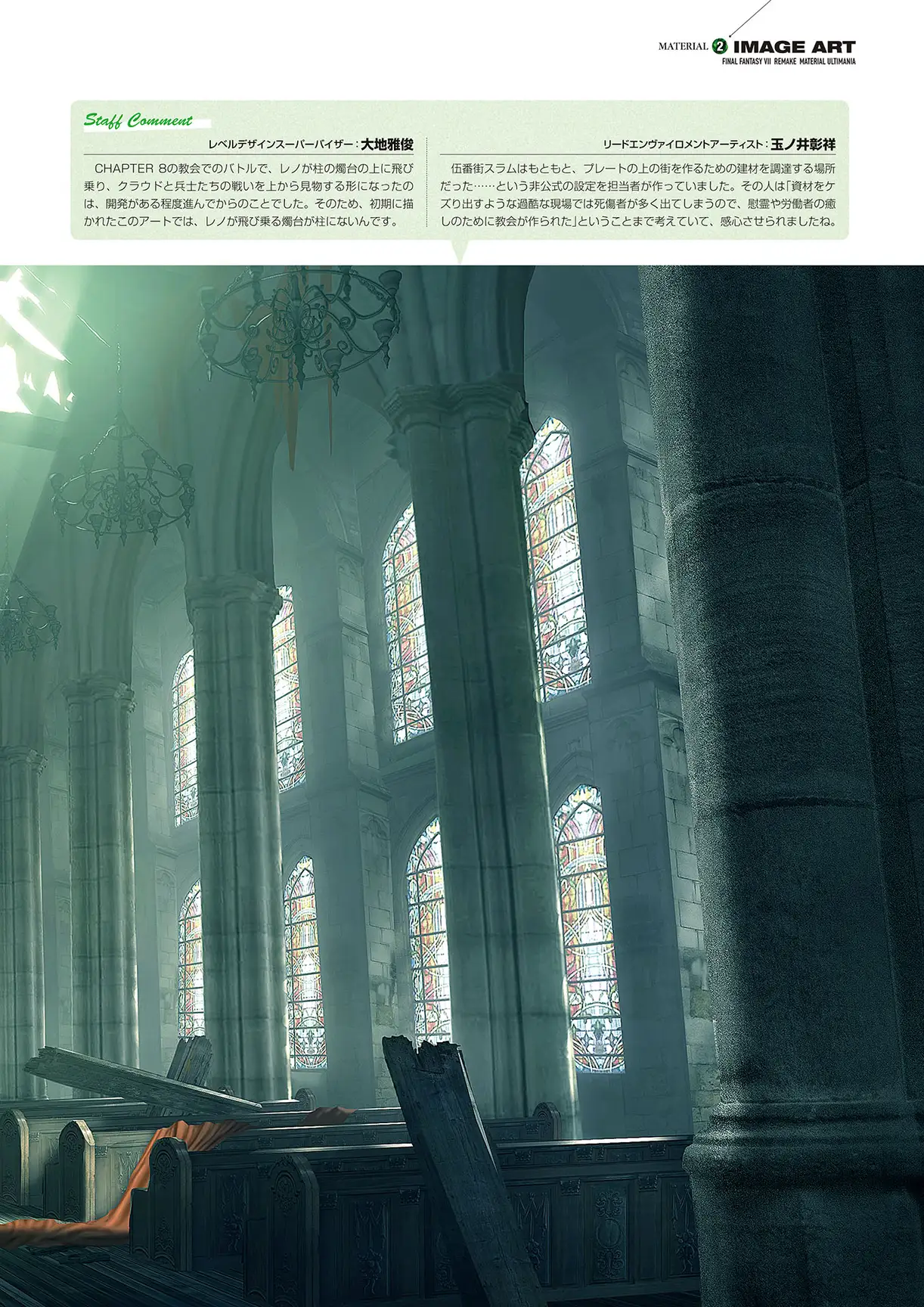
The church interior art is on page 138. The level design supervisor explains that Reno leaping onto a platform by the pillar to watch Cloud fight the soldiers from above was decided fairly late in development, so this early piece of art doesn't have the platform yet. The lead environment artist mentions an unofficial backstory: Sector 5 was originally where building materials for the upper plate were unloaded. The work was brutal and many died, so the church was built to mourn them and comfort the workers.
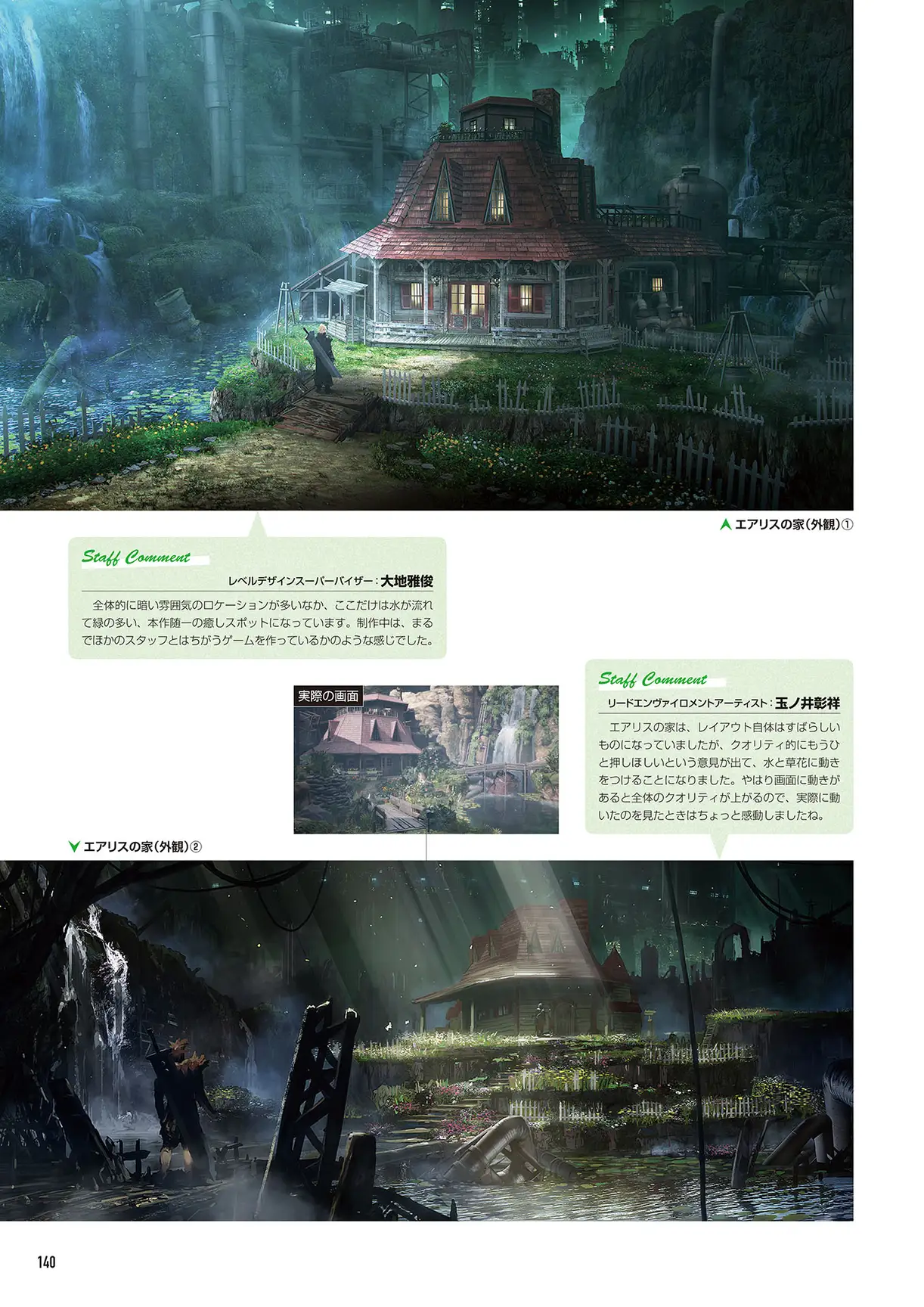
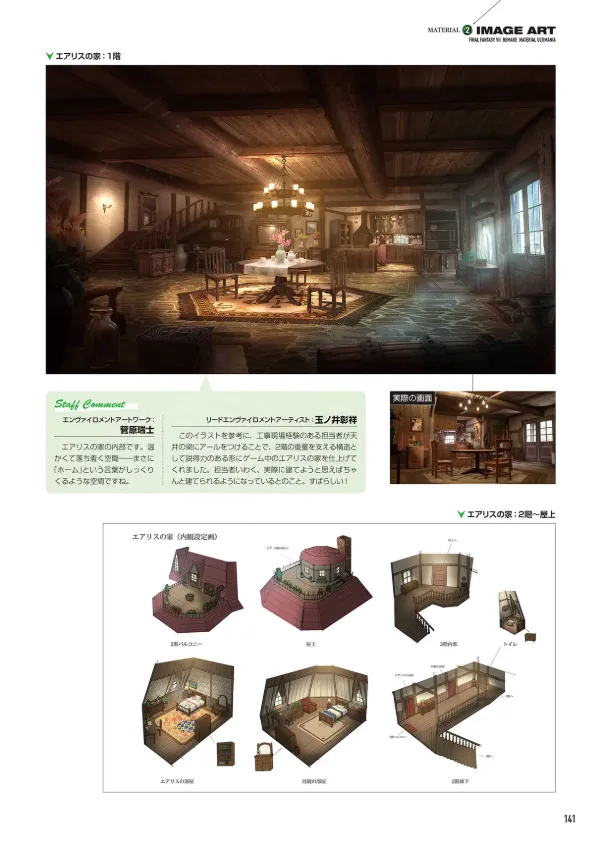
Leave the church and you reach Aerith's house. On page 143, the level design supervisor says that in a dark, gloomy Midgar, this is the only place with running water and greenery — the one healing spot in the entire game — and that working on it felt like making a completely different game from everyone else. Later, someone wanted the quality pushed further, so the team made the water flow and the plants sway.
Page 144 is a cutaway of the house: Aerith's room, her mother's room, the balcony, the stairs to the third floor, each one opened up and drawn. The lead environment artist says a colleague with construction experience curved the ceiling beams so the structure could actually support the second floor. Apparently, you could build it from these drawings.
FINAL FANTASY VII Remake: Material Ultimania
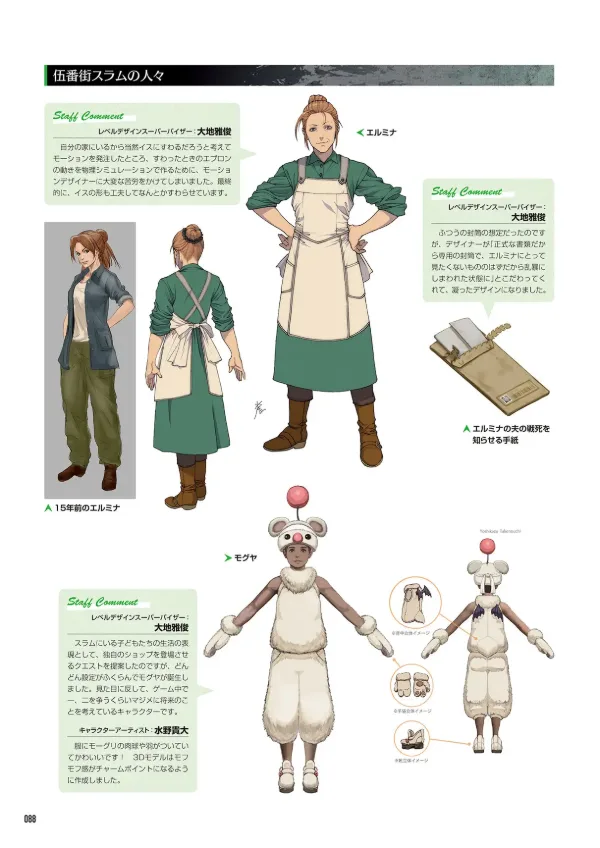
The page that stopped me was page 91: Aerith's adoptive mother, Elmyra. Next to her character art is a letter notifying her of her husband's death in battle. The level design supervisor says they originally planned to use a plain envelope, but the designer insisted on a dedicated one: it's an official document, and it's something Elmyra never wants to see again and would put away immediately.
The same page has another note. The team felt that in her own home, Elmyra should sit in a chair. Getting her apron to move naturally as she sat down took the animators a lot of work, and in the end they even changed the shape of the chair so she could sit.
FINAL FANTASY VII Remake: Material Ultimania
A letter you can barely read in the game, a chair reshaped so someone could sit down. This home feels safe because someone built it as if it were a real home.
Chapter 9, Wall Market: Corneo's Fake Gold
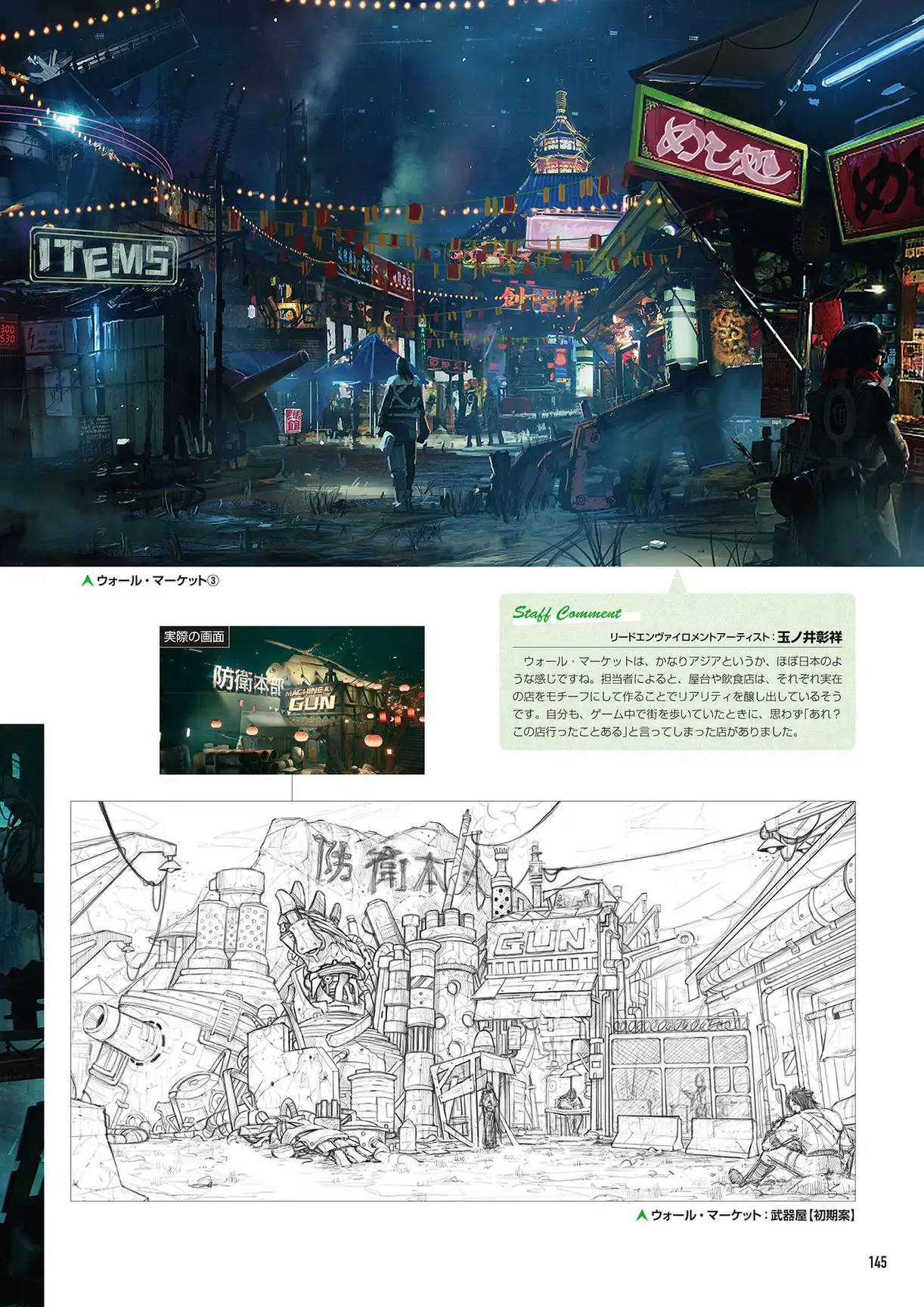
In Chapter 9, Wall Market is loud and gaudy under its neon lights.
On page 148, the lead environment artist says the stalls and restaurants were all modeled on real shops, and that wandering around in the game made them think, "Wait, haven't I been to this place?"
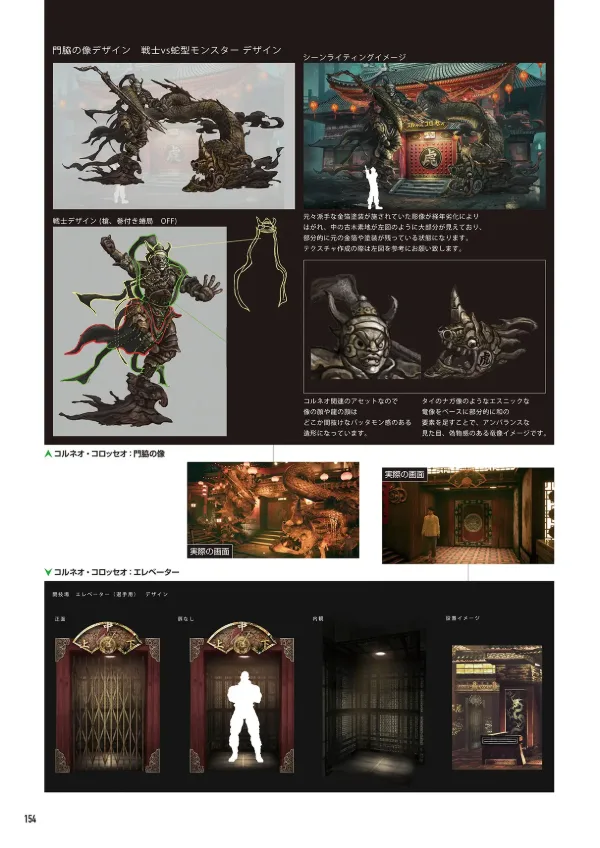
The more real the market is, the faker Corneo gets. Page 157 shows the statues at the entrance of Corneo's Colosseum, and the art direction note says: the statues were once covered in lavish gold leaf, which has peeled off with age to reveal old wood underneath, with only patches of gold and paint remaining. Another note says the dragon is based on exotic ornaments like Thai naga statues, mixed with Japanese elements, to create a dragon that feels mismatched, like a knockoff. On the next page, the bronze statues of the underground arena have buck teeth or hold lumpy objects, which the lead environment artist describes as a deliberately odd, imitation-like quality.
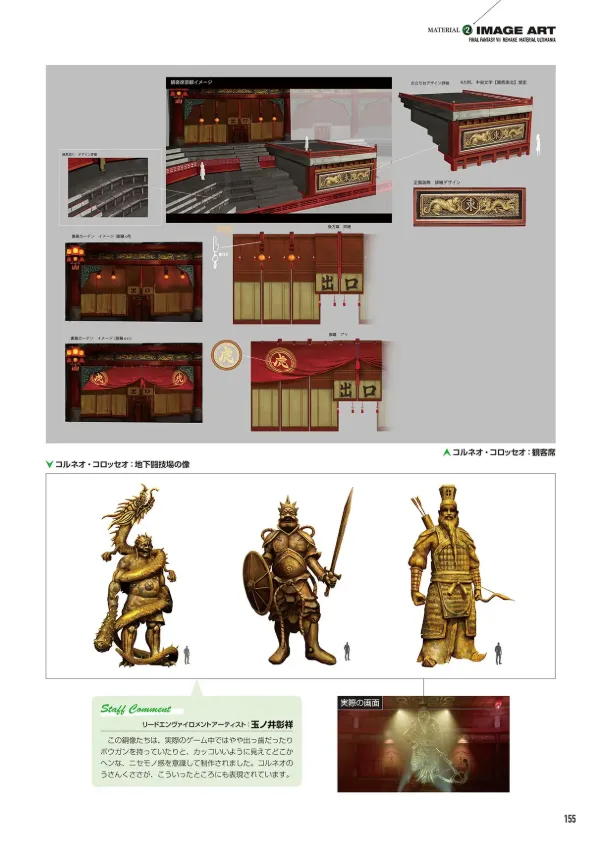
FINAL FANTASY VII Remake: Material Ultimania
Even the popcorn vending machine shaped like an old man in Corneo's mansion (page 162) was based on old machines from 1990s game arcades. The staff were sure it would be a hit. Nobody noticed it, and the person in charge admits to being disappointed.
Showing a vulgar rich man through peeling gold leaf and a cobbled-together dragon is far smarter than just drawing him as wealthy: he has money, but no taste. Players can feel that without reading a single line of dialogue.
Chapter 16, the Shinra Building: The Angle That Couldn't Be Found
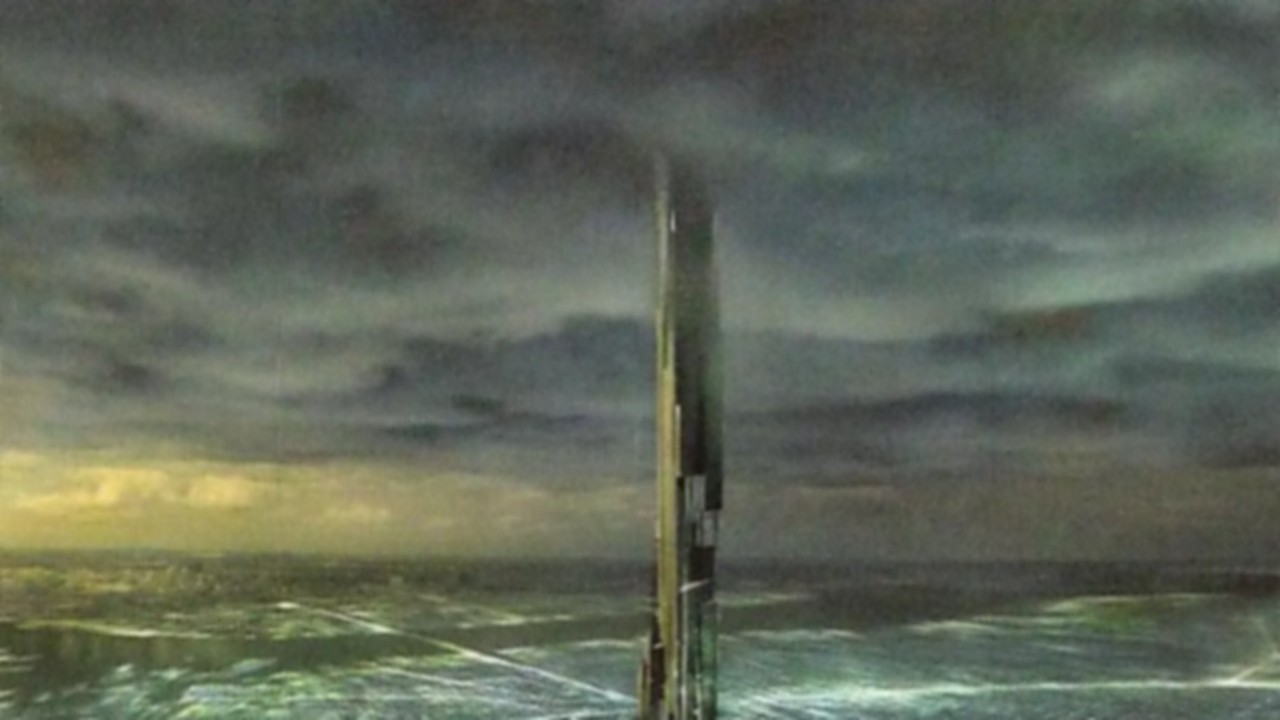
Chapter 16 opens with the camera on the Shinra Building, then pulling back as Cloud steps into frame, sword on his back, looking up at the tower. It recreates one of the most famous pieces of art from the original game.
On page 169, Motomu Toriyama says this shot was hard to make: in the game's Midgar, they simply couldn't find a camera height that gave the same viewpoint as the original painting.
Page 18, near the start of the book, is the redrawn version of that image. Animation director Kenta Matsubara says the new Shinra Building had far more detail than the original, yet to match the feel of that old image they actually removed some parts and moved pipes and cranes. Cloud's pose went through more than 50 versions.
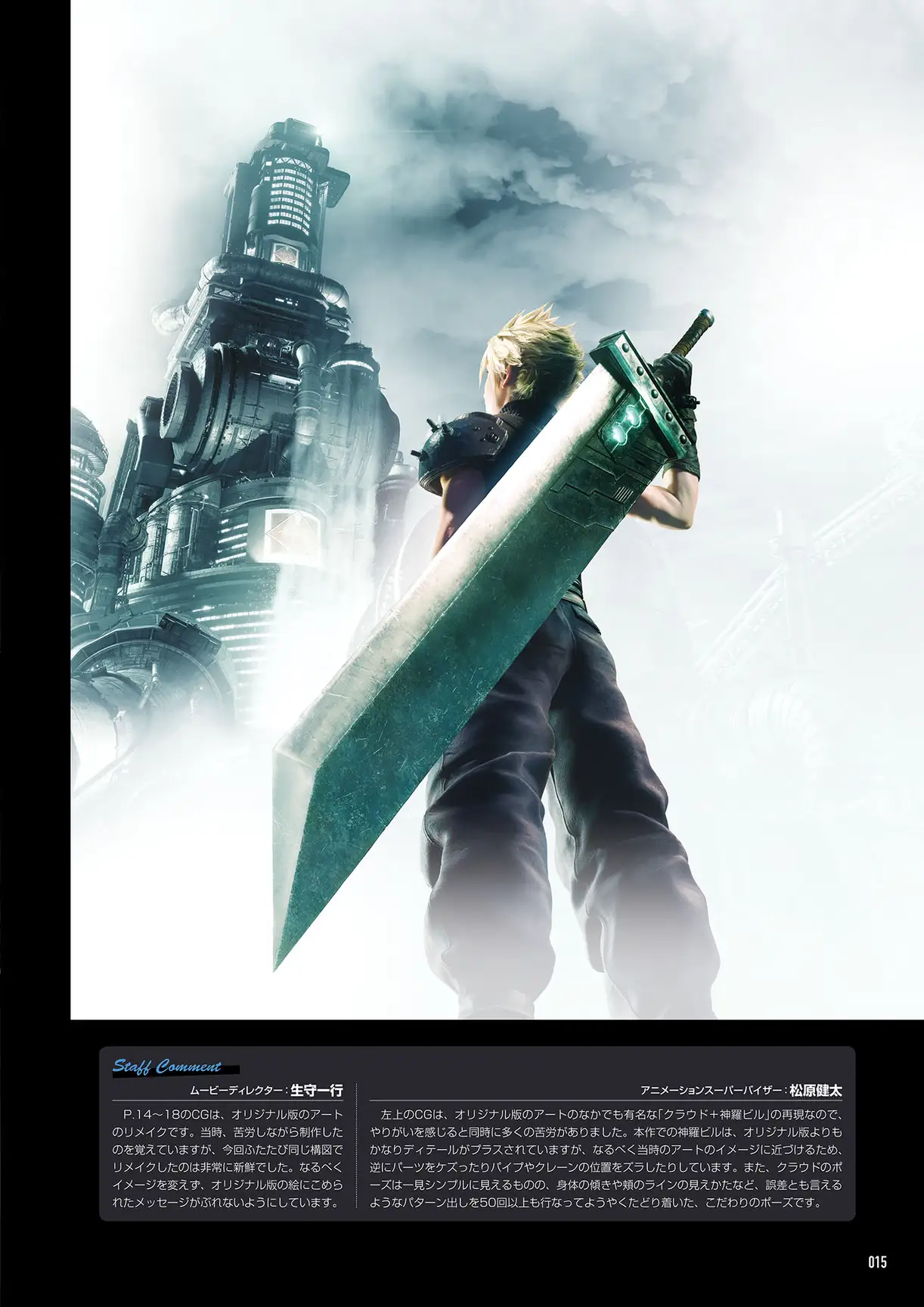
That original image was never shot inside a real city. More than twenty years later, making it work in a 3D Midgar meant chasing an angle that only existed in memory.
Inside the building, page 173 shows an exhibit with the old sign from when Shinra was still a small company called "Shinra Manufacturing," along with a photo of the young President. The lead environment artist says the machine he's working on in the photo is actually part of the "slum sun" beneath the Sector 4 plate.
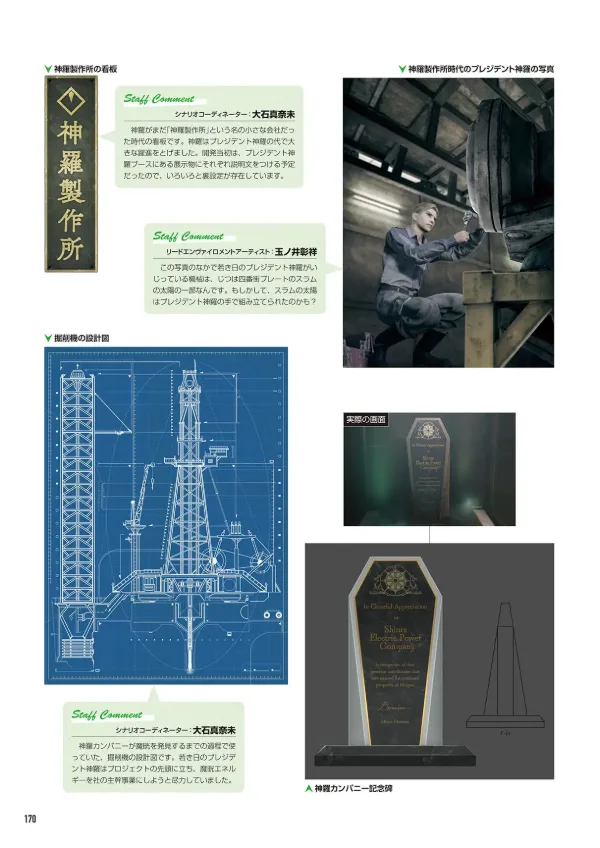
FINAL FANTASY VII Remake: Material Ultimania
Further up, page 178 is the floor plan of the 64th-floor restroom that Cloud and the others pass through during the infiltration. Environment artist Ken Kunimoto says it was modeled on the restrooms in Square Enix's own office building.
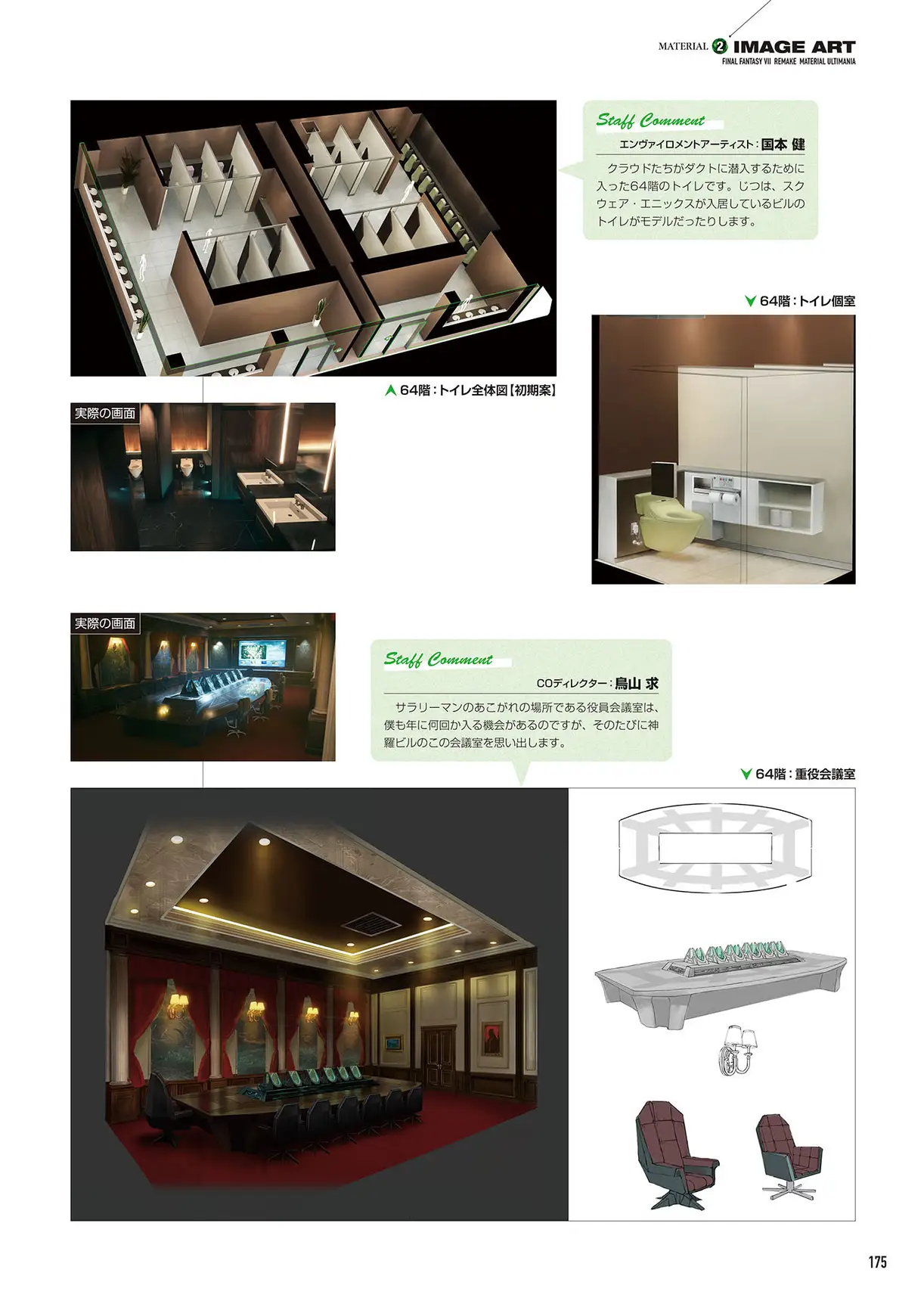
From Barret's magazine to the Shinra Building's restroom, this art book holds a Midgar that is far more complete than the one you can see in the game.
Staff comments quoted in this article are paraphrased from a Chinese translation of Final Fantasy VII Remake Material Ultimania.