Why There Are No Children in City 17: Walking Through Half-Life 2 Again with Its Development Art Book
From the opening train ride to the distant Citadel, we retrace the route of Half-Life 2 through City 17. At every stop, we open Valve's official development book, Raising the Bar, to the matching page and look at how the city was designed.
 ArtSee Editors
Contents · 0
Note: this article was translated from Chinese with the help of AI. Please excuse any awkward phrasing.
Half-Life 2 opens with a train pulling into City 17. On the plaza outside the station, Dr. Breen speaks from a giant screen, and in the distance the Citadel pierces the gray clouds.
Plenty of people remember that sequence. But after going through Valve's official development book, Raising the Bar, I realized that many of the most unsettling things about this city are things that were taken out.
So let's walk through City 17 again, following the game's route, and open the book to the matching page at every stop.
The Station: Where Players Meet This World
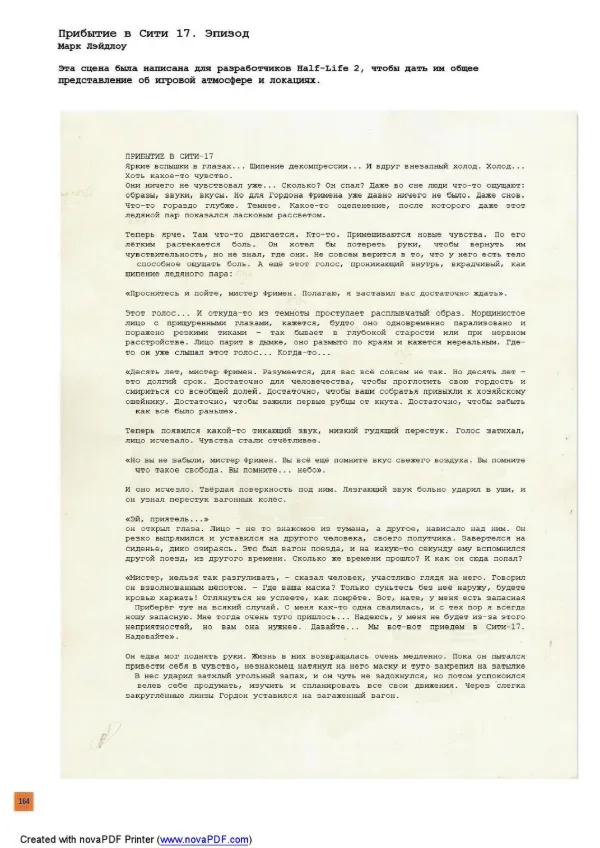
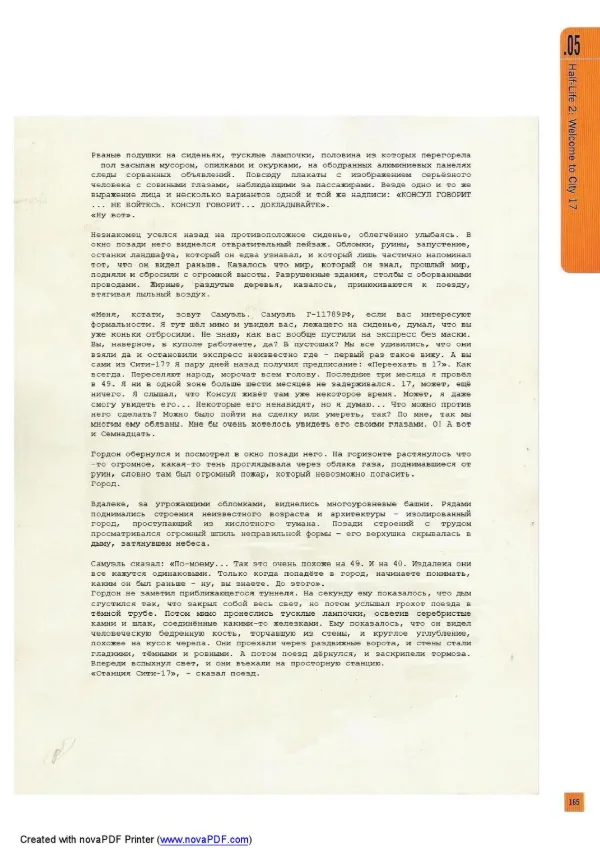
Pages 165 and 166 are two typewritten pages — a scene written early in development so the team could share a common picture of the game's atmosphere.
In this version, when Gordon wakes up, a passenger named Samuel is sitting across from him. He hands Gordon a respirator and a spare magazine and tells him, "We're almost at City 17." The carriage is covered in posters showing a pair of snake-like eyes, with slogans reading: "The Advisor speaks... do not be afraid. The Advisor speaks... report."
Samuel never made it into the game.
The station where the train stops is on page 196. Art director Viktor Antonov says the first version looked a lot like the station Eiffel designed in Budapest, while the final one is closer to a station near Paris where he used to live.
Aaron Barber explains why the station mattered so much: it's where players first get to know this world — how it has changed, and how much humanity is left in it. The book notes that the station serves the same purpose as the train ride at the start of the first game: players don't have to rush, and have time to look around for themselves.
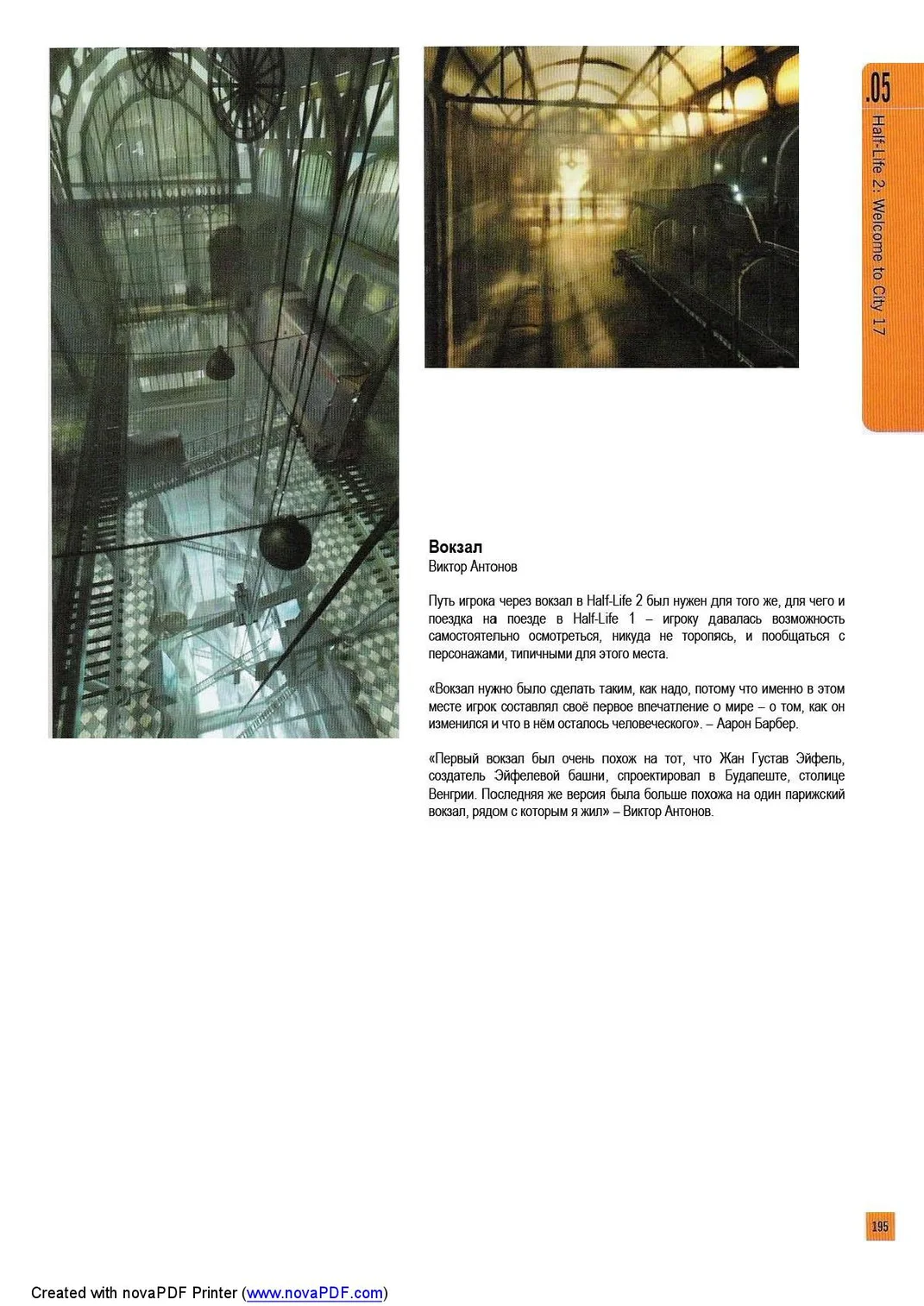
Many games are in a hurry to put a gun in your hands. Half-Life 2 first lets you walk slowly through a station, looking at the screens on the walls, the people waiting in line, and the way the police treat an ordinary person. Before you have a weapon, you already know what has gone wrong here.
The Streets: Not Prague
Step out of the station and you're on the streets of City 17.
On page 167, Antonov explains that City 17's locations and style draw on several Eastern European cities, mixing architecture from the 1930s, 1940s and 1970s. They chose Eastern Europe because old and new buildings are crammed together there, showing traces of past eras, the decline of communism and many other layers of history. The team deliberately avoided the gothic route of Prague and vampires.
Page 169 shows photos the team collected in Bulgaria, Russia and Romania. According to the book, none of them were used as-is; every one was artistically reworked.
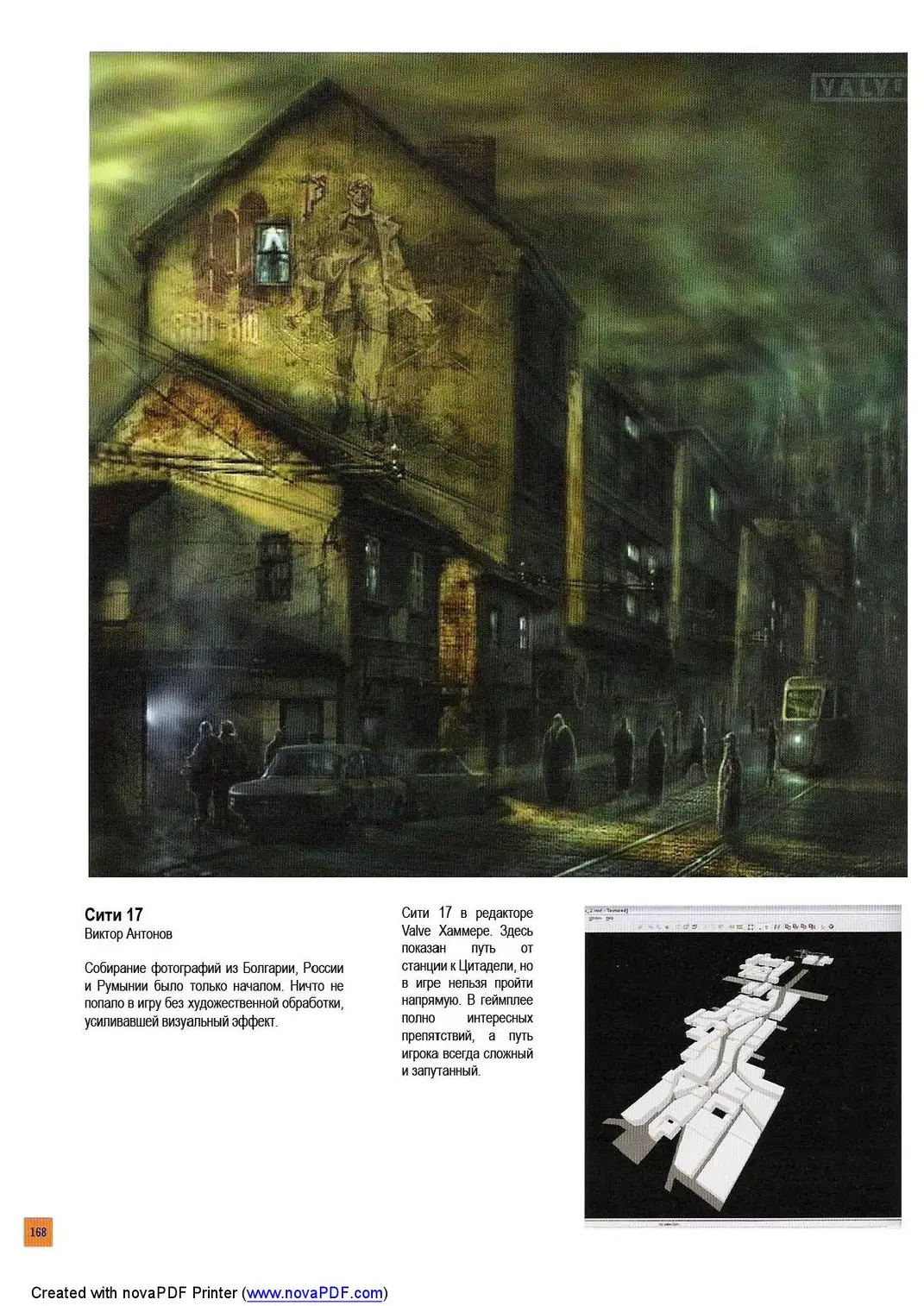
Antonov also says something important on page 168: the game could have been completely realistic, but the team wanted a feeling that was distorted, abstract and surreal.
The early sketches on page 170 show where that "something's off" feeling comes from: a dark street that opens into a menacing plaza, futuristic machines growing out of old buildings. The book also mentions that the big screen Dr. Breen speaks from was originally shaped like an eye.
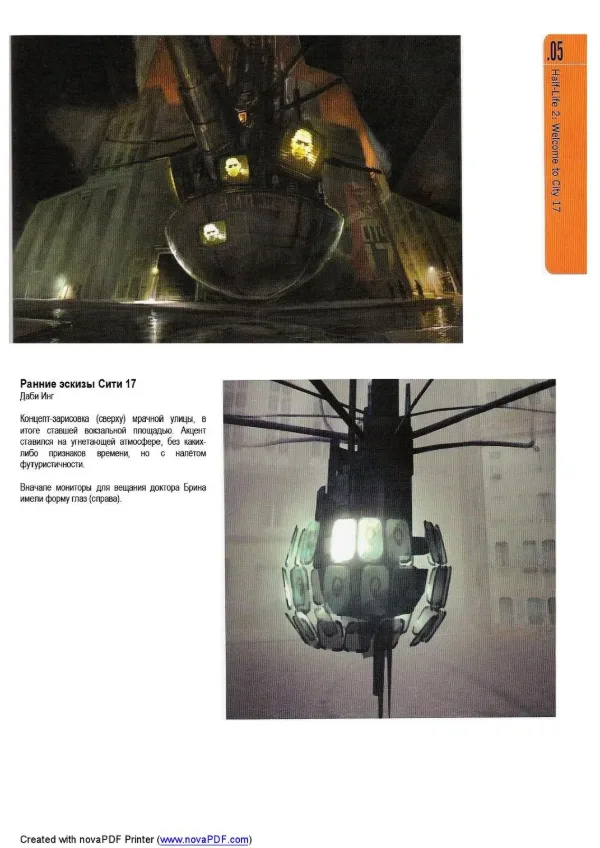
That's the flavor of City 17: you feel like you've seen every building somewhere before, yet the city as a whole feels inexplicably wrong.
Courtyards and Light: A City with Depth
On page 187, Antonov says: "We didn't want to stop at surfaces and façades, so we built a city with inner courtyards: blocks, streets and hidden alleys. These secret places usually hold things you won't see out in the city."
The same page is about light. City 17's main color scheme is the soft, warm autumn light outdoors set against artificial lighting indoors. Shadow edges are soft and warm in tone, while cold light is reserved for liquids. Antonov calls this a deliberate reversal of the traditional palette.
At the bottom of the page is an easily overlooked photo: a rooftop drainpipe in Sofia, the capital of Bulgaria. The book says the photographers made a point of shooting details that seem insignificant at first glance.
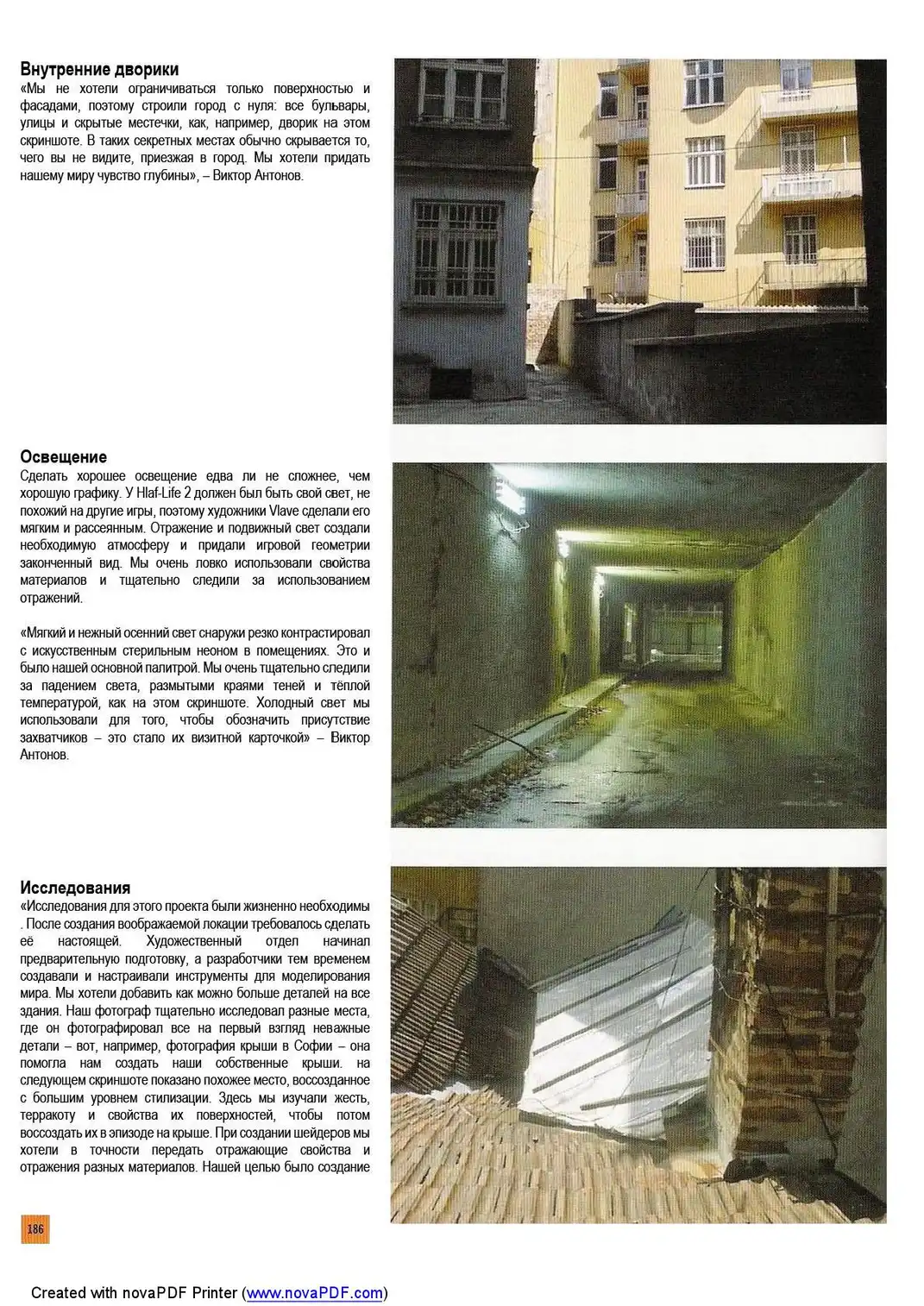
Think back to City 17 in the game: it's an occupied city, yet the sunlight is often warm. Maybe it's because the light is gentle that what happens in the city feels so cold.
Why There Are No Children in City 17
If you've played Half-Life 2, you may have noticed: there isn't a single child in all of City 17.
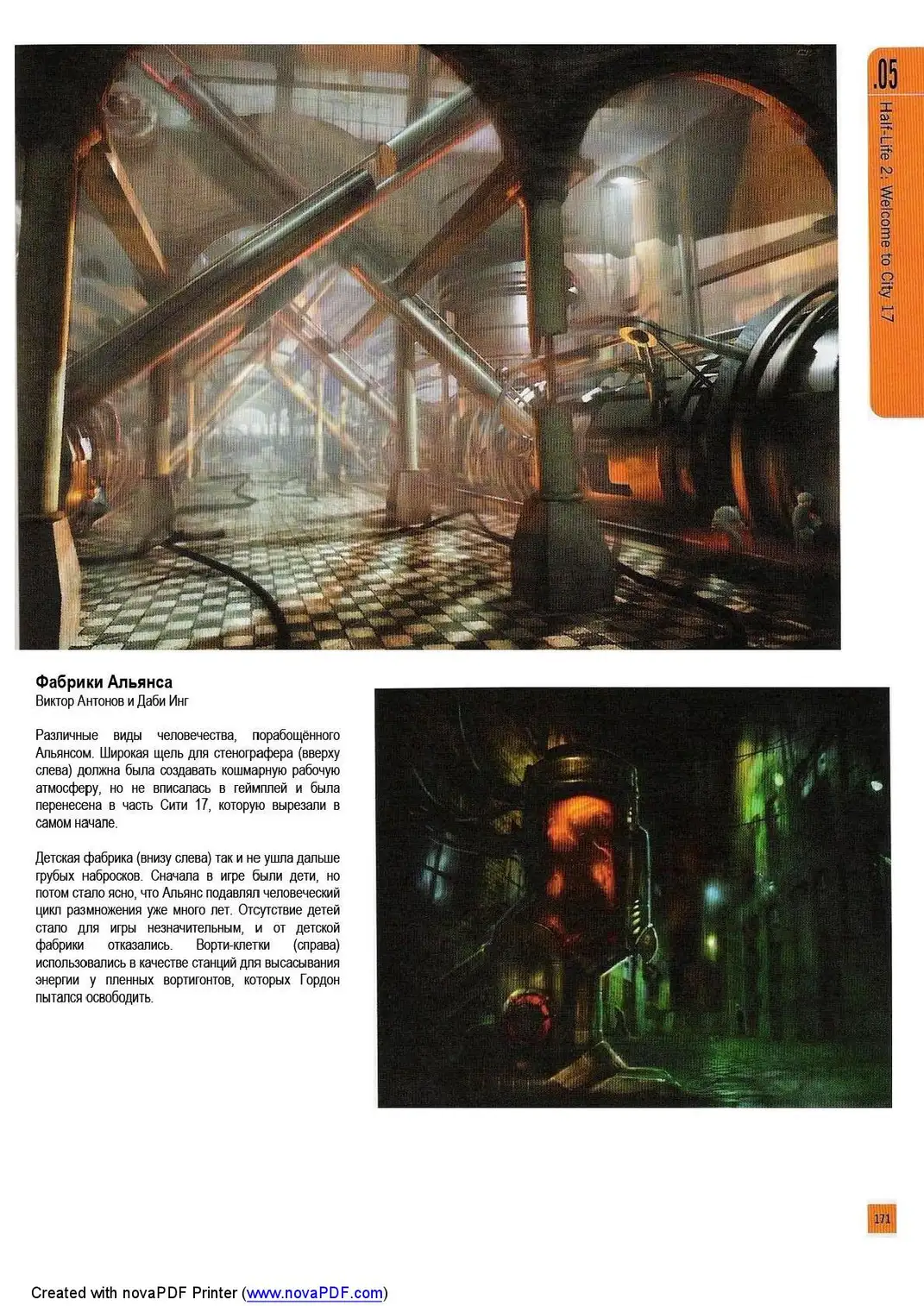
Page 172 shows sketches of a Combine factory, with all kinds of people altered by the Combine. The book mentions that the bottom of the page once had a child factory, which was never developed further. The game originally did include children, but as the setting took shape, the team decided that the Combine had been suppressing human reproduction for years. There would be so few children in the city that the child factory was dropped.
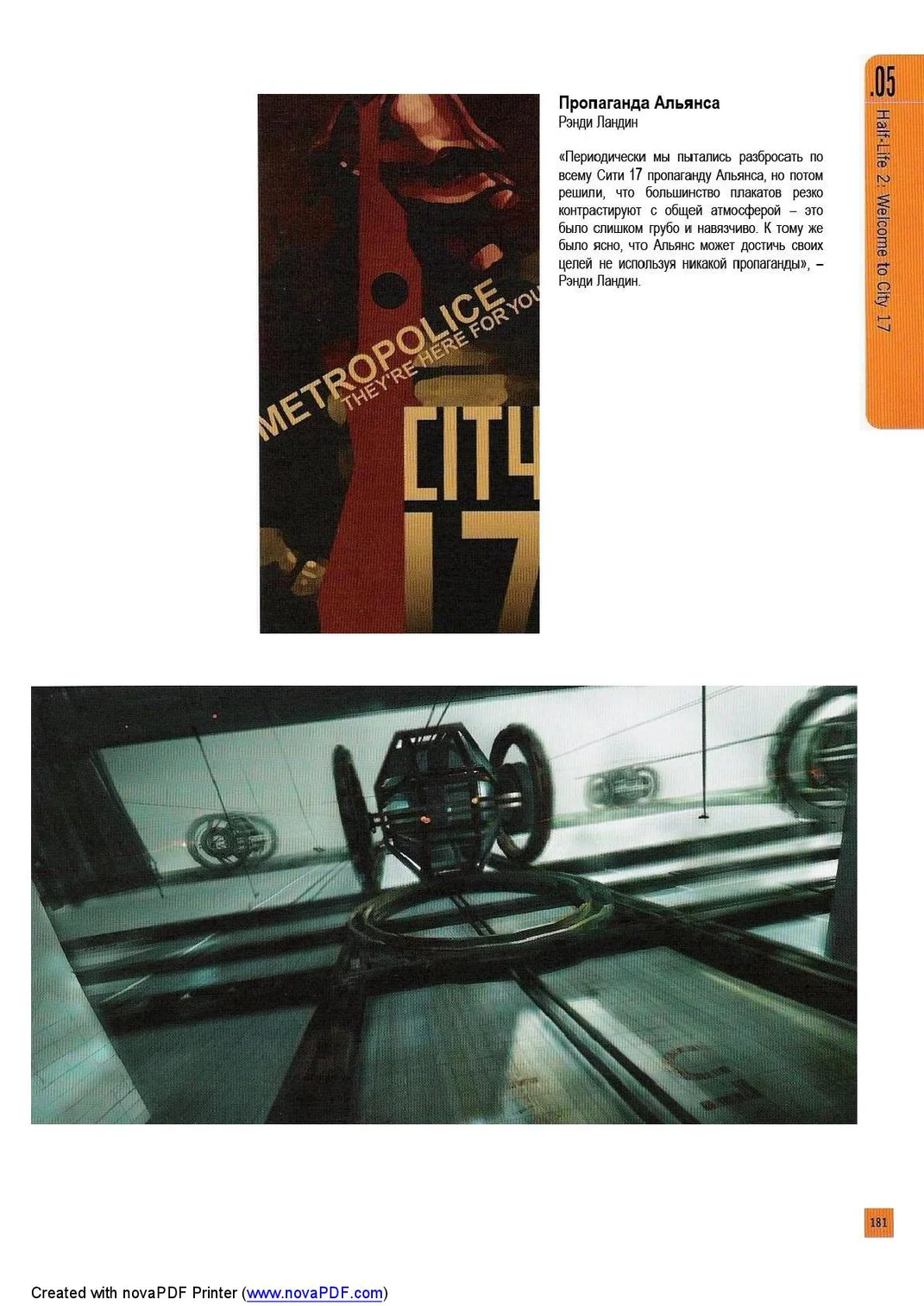
Propaganda posters went through a similar cut. On page 182, Randy Lundeen says the team regularly tried putting Combine propaganda all over City 17, but found most of the posters clashed too abruptly and too bluntly with the overall atmosphere. Besides, it was clear that the Combine didn't need propaganda to get what it wanted.
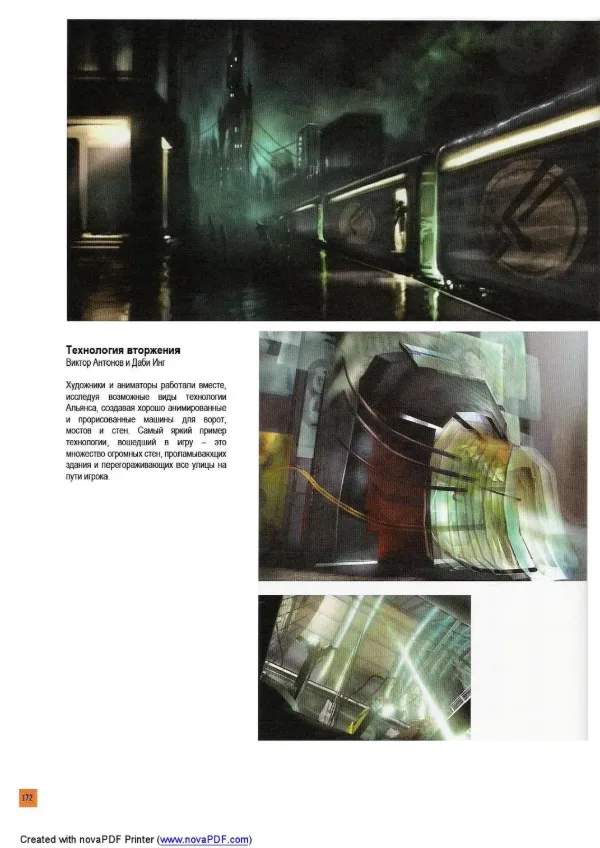
The Combine's real propaganda is the walls. In the sketches on pages 173 and 191, Combine metal walls smash through buildings and seal off entire streets; the book describes them as a metal monster that keeps reassembling itself as it advances.
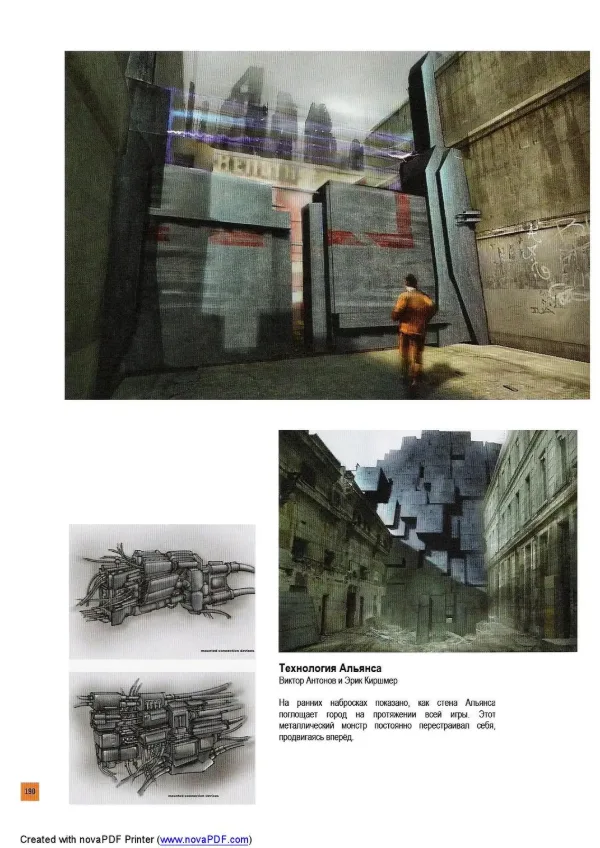
No children, almost no slogans, just walls pushing forward one after another. Much of City 17's oppressiveness comes from these absences.
The Canals and the Oasis
After leaving the city, Gordon escapes along the canals.
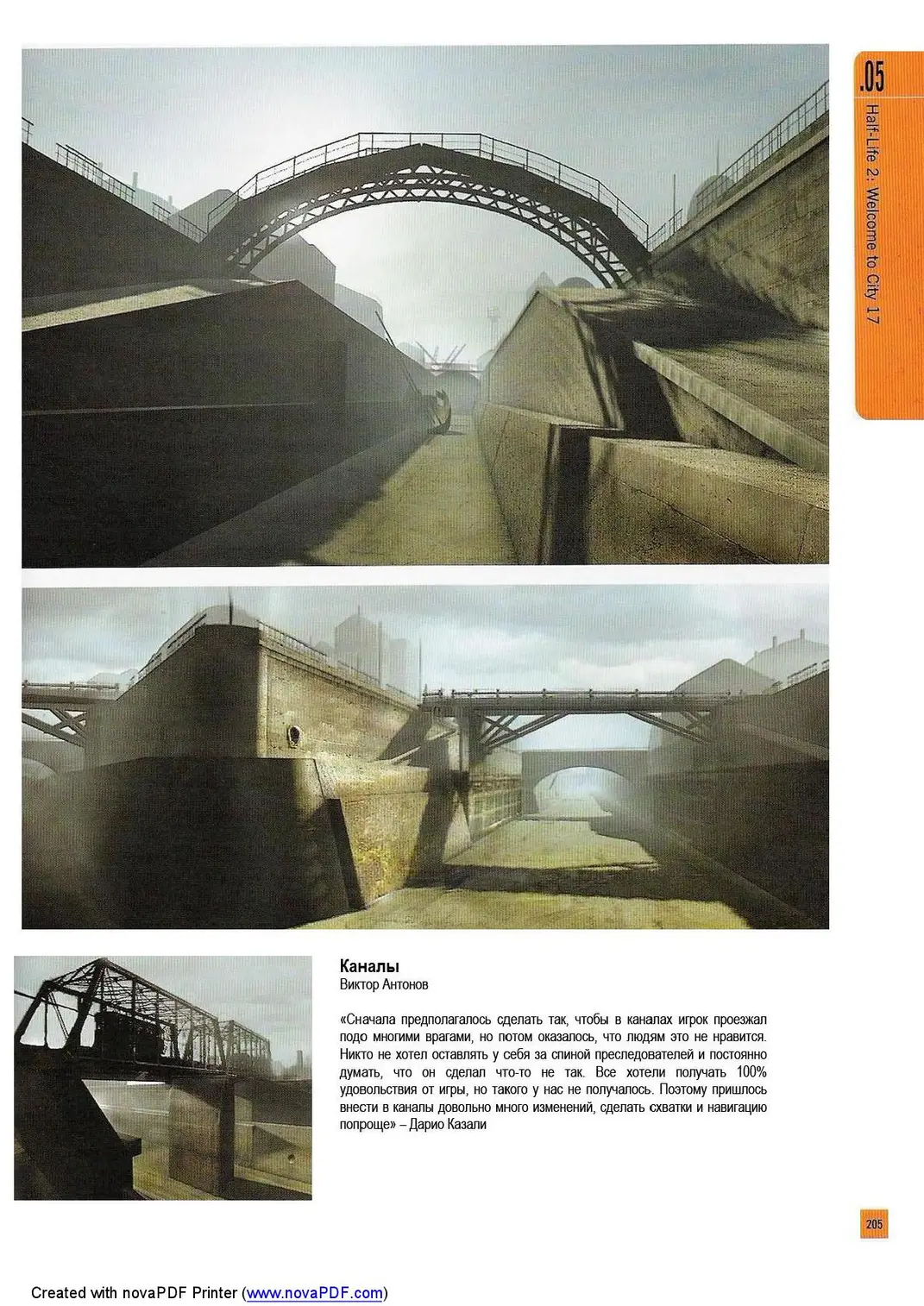
On page 206, Dario Casali says the original idea was to have players pass under gate after gate in the canals, but it turned out players didn't enjoy it: nobody wants to keep their back to their pursuers while worrying about whether they've done something wrong. So the canals were heavily reworked to make both combat and navigation smoother.
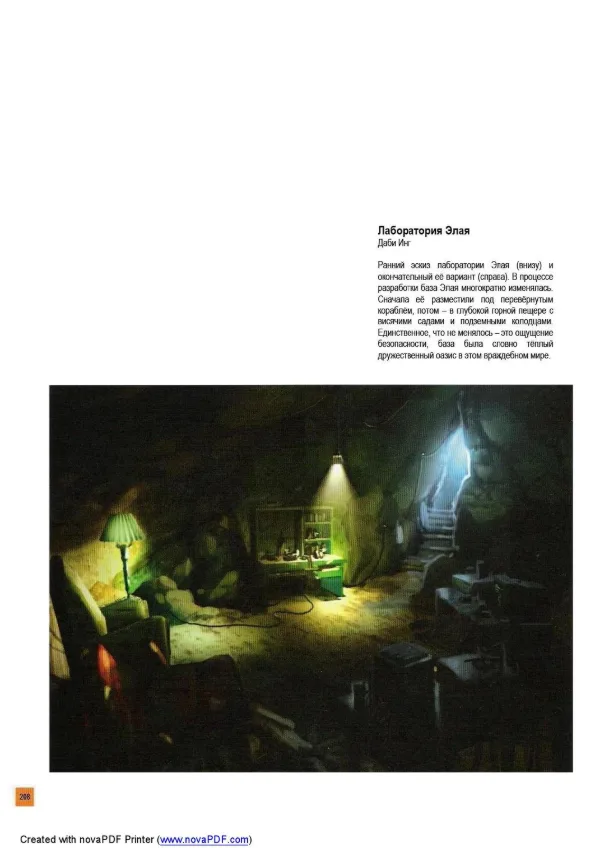
At the end of the canals is Eli's lab. Page 209 says this base moved several times during development: first under a capsized ship, then into a deep mountain cave with hanging gardens and underground stables. The one thing that never changed was the sense of safety: in a hostile world, it was always a warm, friendly oasis.
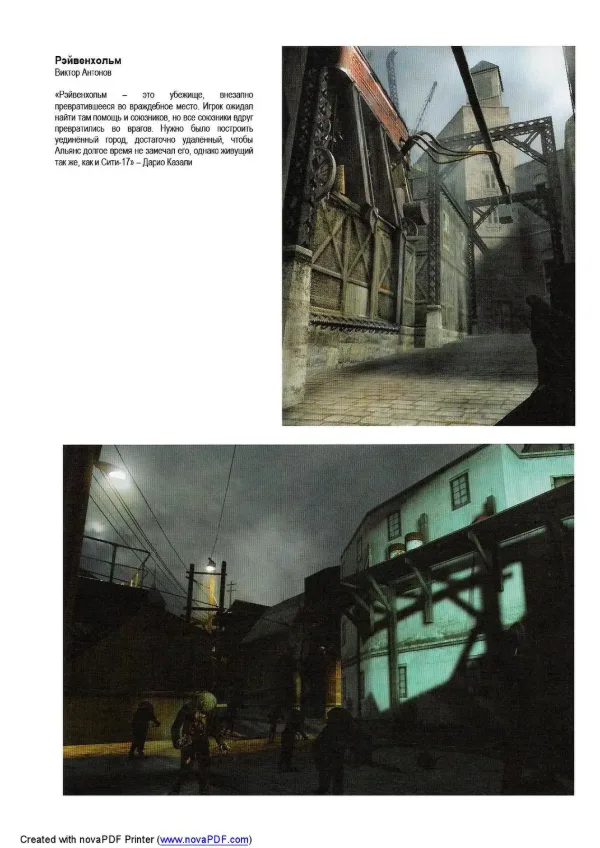
That's why Ravenholm, which comes next, is so frightening. On page 211, Casali says Ravenholm was meant to be a refuge that suddenly turns into a place full of enemies: players expect to find help there, and instead every ally has become an enemy.
The Citadel: Visible from the First Second
Finally, back to the Citadel.
On page 181, writer Marc Laidlaw says the team wanted the end of the game to echo its beginning: players should see the destination of their journey from the first few seconds, so that when Gordon finally reaches the Citadel, it already feels familiar. He says the first game failed to do this, so this time they were determined to make up for it.
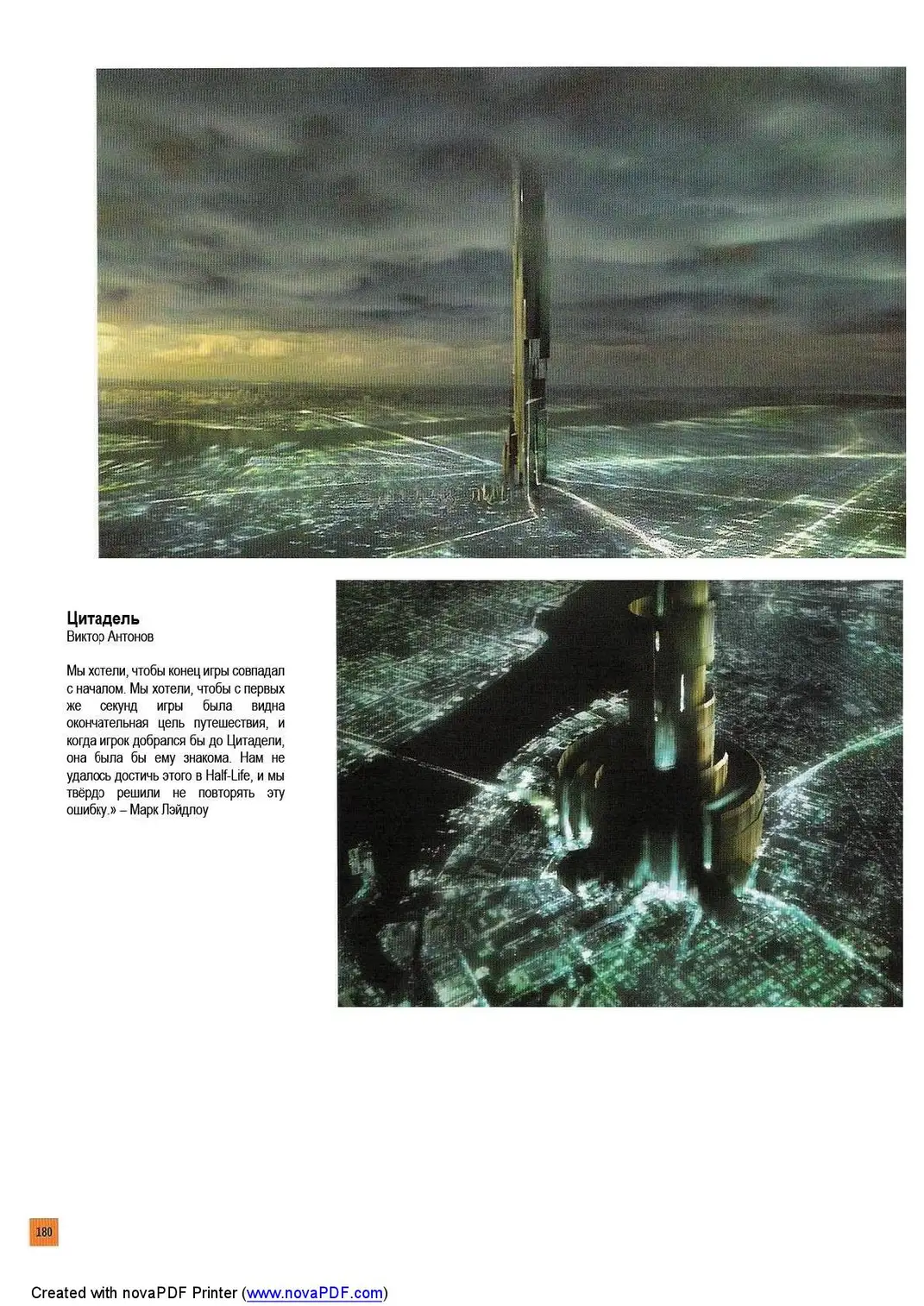
Looking back, the Citadel is already on the horizon the moment you leave the station. Every step you take in City 17 brings you a little closer to it.
Antonov later worked on the visual design of Dishonored, and its city, Dunwall, feels just as familiar and just as wrong.
Developer comments quoted in this article are paraphrased from a Chinese translation of Half-Life 2: Raising the Bar.